Blog
Virtual Reality for Product Marketing: How Interactive Product Experiences Drive Engagement, Understanding and Sales
Introduction: Why Traditional Product Marketing Is No Longer Enough
Product marketing is becoming harder.
As products grow more complex, especially in technical and specialist industries, explaining them clearly has become a real challenge. Brochures, videos and static visuals can communicate features, but they rarely create true understanding. Customers are often left trying to piece together how something works, what it feels like to use, and why it matters.
This gap between information and understanding slows everything down. Sales cycles become longer, conversations become more repetitive, and decision making becomes more uncertain.
At the same time, expectations are changing. Buyers increasingly want to explore and experience products before making a decision. Virtual reality is no longer experimental technology. The global market exceeded 28 billion dollars in 2022, with adoption growing across industries including healthcare, manufacturing, and education.
What this signals is simple. The way products are communicated is changing.
What is Virtual Reality in Product Marketing?
Virtual reality allows companies to place customers inside a fully digital environment where they can explore and interact with a product as if it were physically in front of them.
Rather than watching a demonstration or reading about features, users can move around a product, engage with it, and see how it behaves in context. This creates a completely different level of understanding.
Unlike augmented reality, which enhances the real world, virtual reality removes it entirely and replaces it with a controlled environment. This allows companies to present products without limitation, recreating environments, simulating real scenarios, and guiding users through experiences that would otherwise be difficult to deliver.
Instead of asking someone to imagine how something works, virtual reality allows them to experience it directly.
The Shift from Content to Experience
For years, marketing has focused on delivering information. The assumption has been that if you provide enough detail, customers will understand and make informed decisions.
In reality, understanding comes from experience.
The closer someone gets to interacting with a product, the easier it becomes for them to evaluate it. This is why physical demonstrations have always been so effective. They remove uncertainty and replace it with clarity.
Virtual reality makes this type of experience scalable. It allows companies to deliver realistic, interactive product experiences without the need for physical access.
This shift is not just about engagement. It is about reducing friction in decision making.
Why Virtual Reality Works So Well for Product Marketing
One of the most important aspects of virtual reality is the sense of presence it creates. Users feel as though they are inside the experience rather than observing it from the outside. This makes the experience more intuitive and far easier to understand.
When people experience something directly, they remember it. Immersive experiences create stronger mental associations than static content, leading to better recall and a clearer understanding of value.
There is also a clear relationship between interaction and engagement. The more a customer interacts with a product, the more invested they become in understanding it.
Research supports this. Studies from PwC found that immersive environments can enable people to learn up to four times faster than traditional methods, while also increasing confidence in applying what they have learned. While this is often discussed in the context of training, the same principle applies to product understanding. When people learn by doing, they understand more quickly.
This confidence plays an important role in decision making. When customers fully understand a product before they commit, they are more likely to move forward and less likely to hesitate.
It also has an impact after the sale. Better understanding leads to better expectations, which reduces the likelihood of dissatisfaction or misalignment later on.
If you are exploring how immersive experiences could help communicate your product more effectively, it is worth understanding what is possible with the right approach.
Contact UsWhere Virtual Reality Fits in Product Marketing
Virtual reality is particularly valuable when products are difficult to communicate through traditional methods.
This includes products that are technical, high value, or dependent on a specific environment to be properly understood.
In these cases, simply describing features is not enough. Customers need to see how a product behaves, how it fits into a real setting, and how it solves a problem.
Virtual reality allows companies to create these experiences in a controlled and repeatable way.
It also creates opportunities for more personalised experiences. Different users can explore products in ways that are relevant to their needs, focusing on the features and scenarios that matter most to them.
Real Examples of Virtual Reality in Product Marketing
While the concept of virtual reality in marketing can feel abstract, its impact becomes much clearer when looking at how it is being used in real scenarios.
Across industries, companies are already using immersive experiences to help customers better understand products, reduce uncertainty, and make more confident decisions.
One of the earliest and most well-known examples comes from Volvo, which developed a virtual reality experience that allowed users to take a test drive of the XC90. Instead of relying on a visit to a dealership, potential customers could explore the car's interior, understand its features, and experience it from a first-person perspective. This gave users a much stronger sense of the product before ever speaking to a salesperson, helping to build familiarity and confidence early in the buying process.
A similar approach can be seen in retail. IKEA created virtual environments that allow users to walk through kitchens and living spaces, interacting with furniture in a realistic setting. Rather than imagining how products might look or fit together, customers can explore complete environments and understand how different elements work as a whole. This shift from isolated product viewing to contextual experience makes it far easier to evaluate design choices and make decisions.
In real estate, companies using platforms such as Matterport have adopted immersive walkthroughs that allow buyers to explore properties remotely. While not always delivered through headsets, these experiences follow the same principle. Instead of relying on static images or floorplans, users can move through spaces at their own pace, building a much clearer understanding of layout and scale. This has become particularly valuable for remote buyers and early-stage decision making.
What connects these examples is not the technology itself, but the outcome. In each case, virtual reality is used to reduce the gap between seeing and understanding. It allows customers to explore products in context, interact with them directly, and build confidence before making a decision.
If you are considering how this could apply to your own product, we can help you explore what an immersive experience might look like in practice.
Contact UsThe Commercial Impact of Virtual Reality in Product Marketing
Beyond engagement and experience, one of the most important questions for any organisation is whether virtual reality delivers measurable value.
In many cases, the answer comes down to efficiency.
Traditional product marketing often relies on repeated demonstrations, in-person meetings, and physical logistics. These processes take time, require coordination, and are difficult to scale. Virtual reality changes this by allowing the same experience to be delivered consistently, without the need for travel, setup, or physical equipment.
This has a direct impact on how quickly products can be understood. When customers are able to explore a product independently, they require fewer explanations and fewer follow-up conversations. This can shorten sales cycles and allow teams to focus on higher value interactions.
There is also a cost dimension to consider. Physical demonstrations often involve transport, setup, and staff time. Virtual experiences replace many of these requirements, allowing organisations to deliver high-quality demonstrations without the same operational overhead.
Another important factor is consistency. In traditional settings, the quality of a demonstration can vary depending on who delivers it and under what conditions. Virtual reality removes this variability by providing a controlled and repeatable experience every time.
Taken together, these factors position virtual reality not just as a marketing tool, but as a way to improve efficiency across the entire sales process.
Our Real Example: Demonstrating Complex Medical Technology
A clear example of this can be seen in our work with Dr. Mach GmbH & Co. KG, a manufacturer of surgical lighting systems.
Their products are highly specialised and designed to be used in clinical environments. Explaining how these systems behave, particularly how light interacts within a surgical setting, is not something that can be easily communicated through traditional marketing materials.
Transporting the equipment for demonstrations is also impractical in many situations, and even when it is possible, it does not always provide a consistent experience.
To address this, we built a virtual reality experience that allows users to explore the lighting system in a realistic surgical environment.
Users can position the lights, adjust settings, and observe how the light behaves in real time. This gives them a clear and immediate understanding of the product's capabilities.
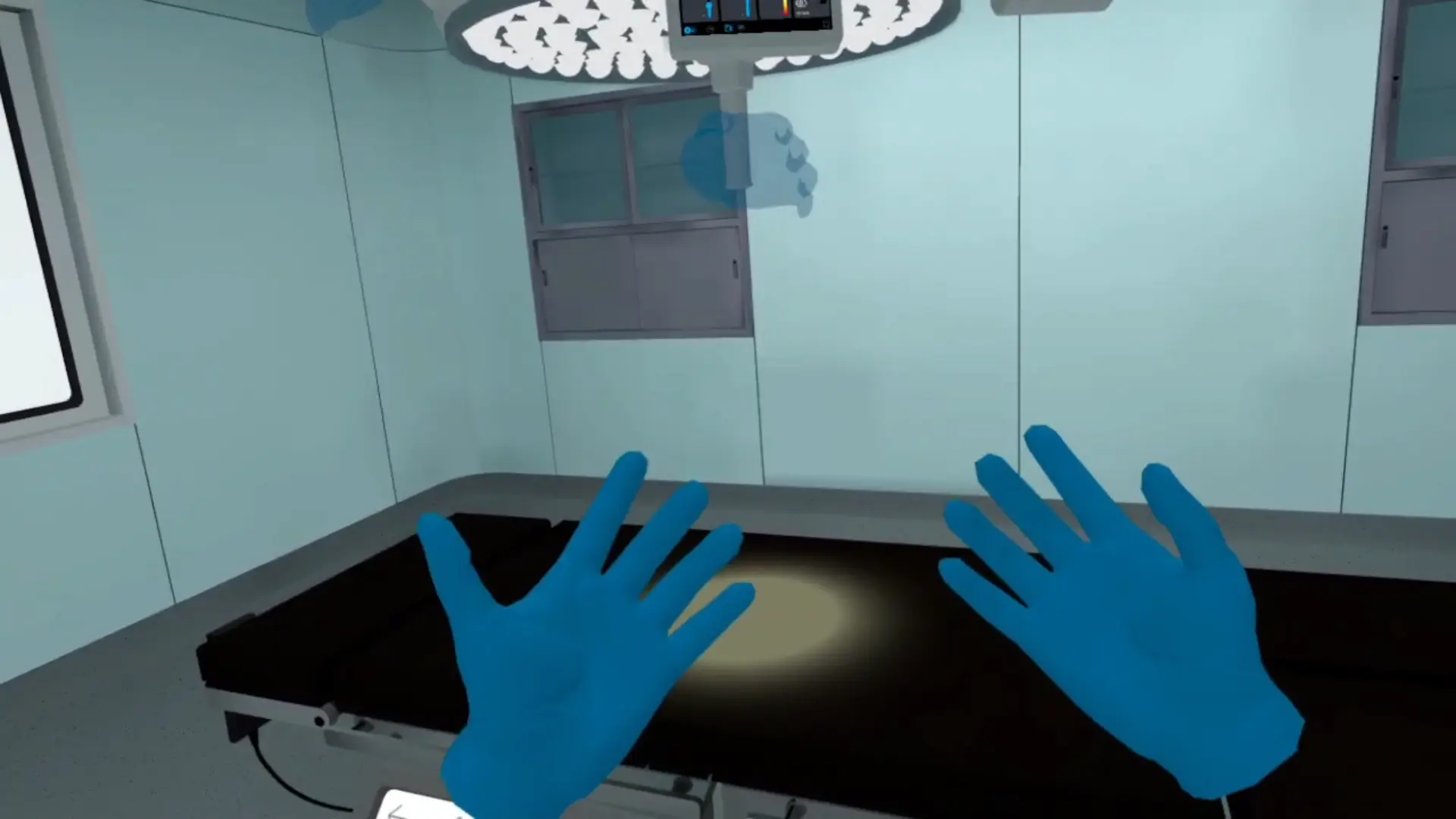
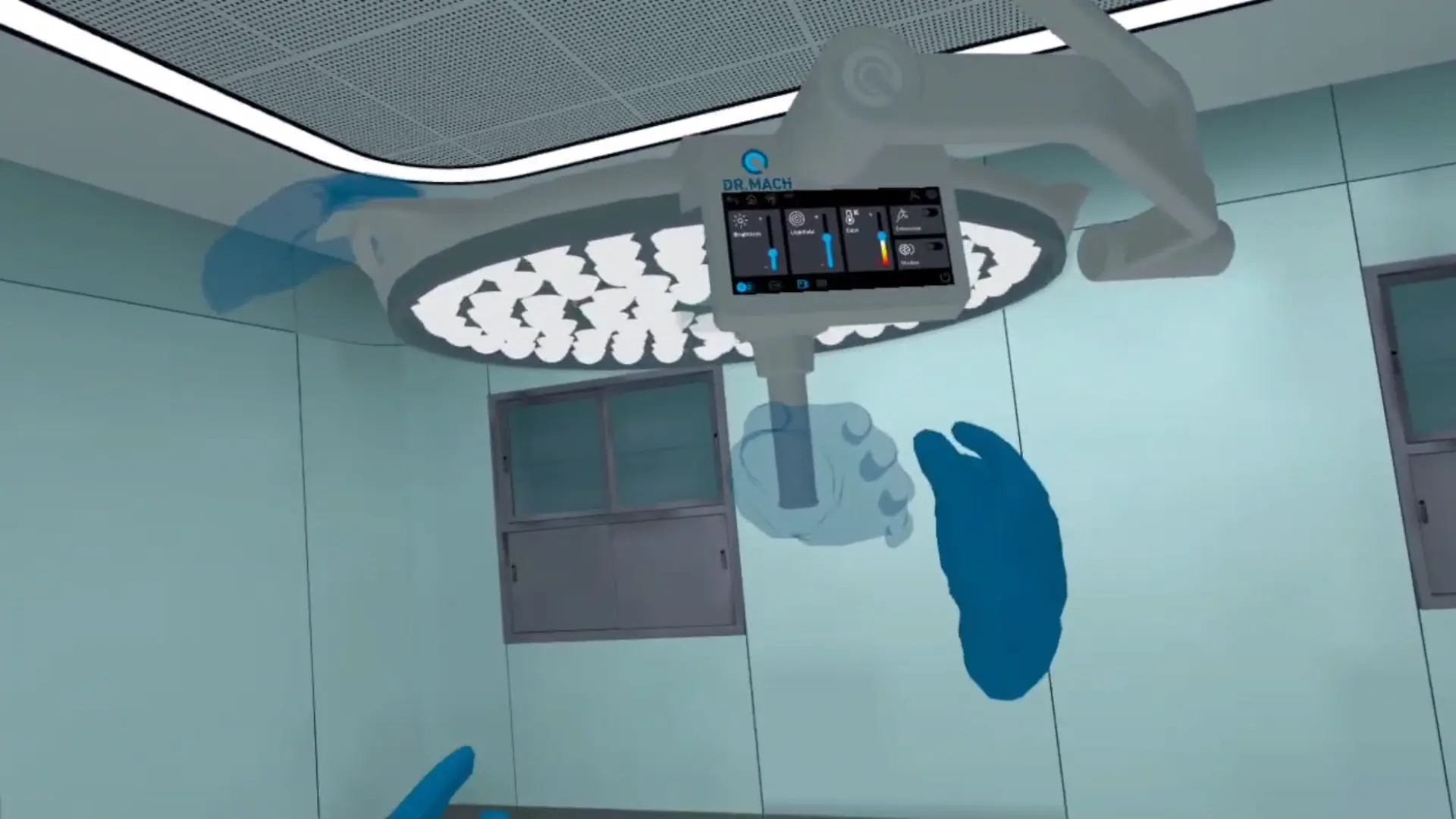
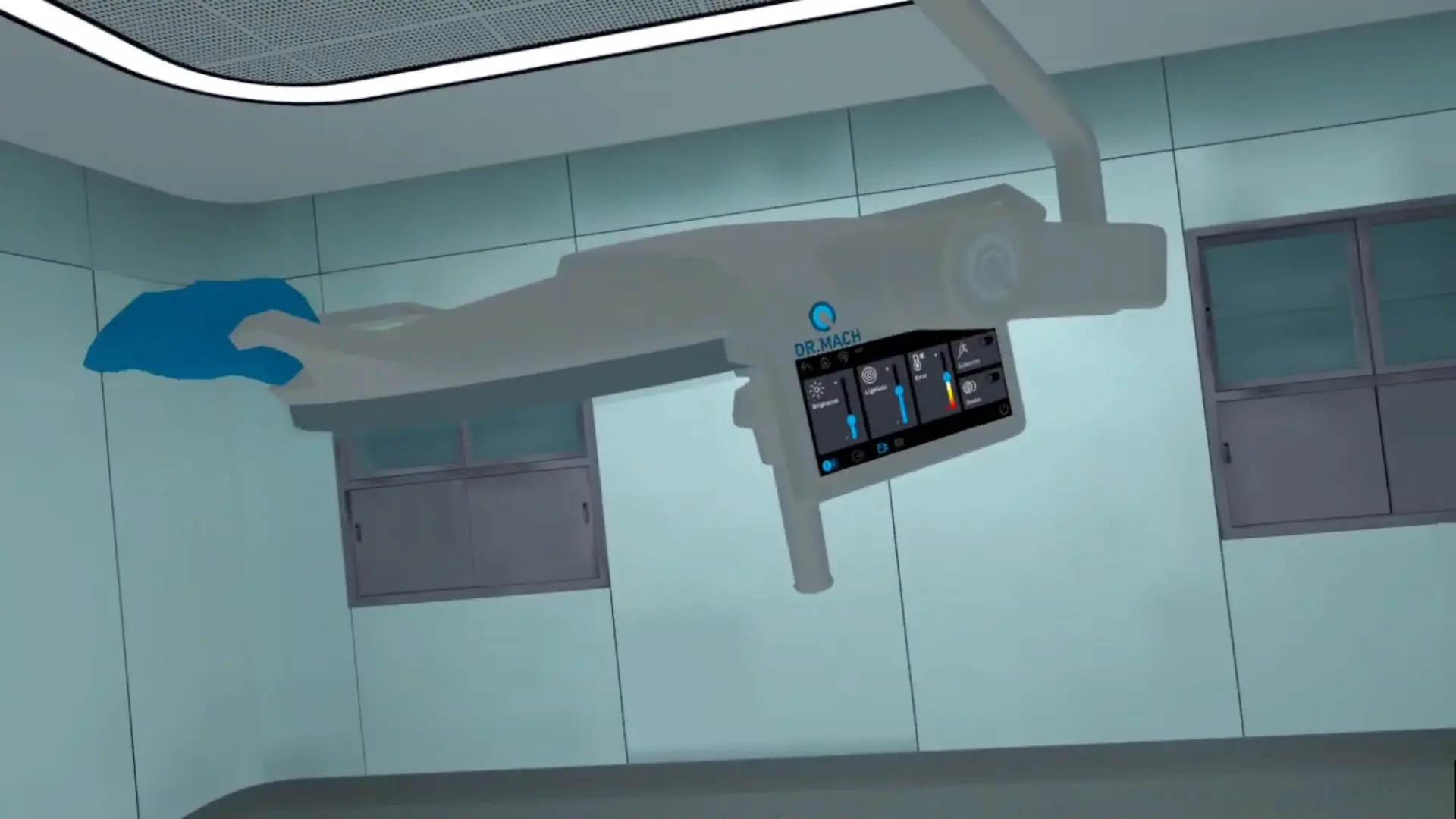
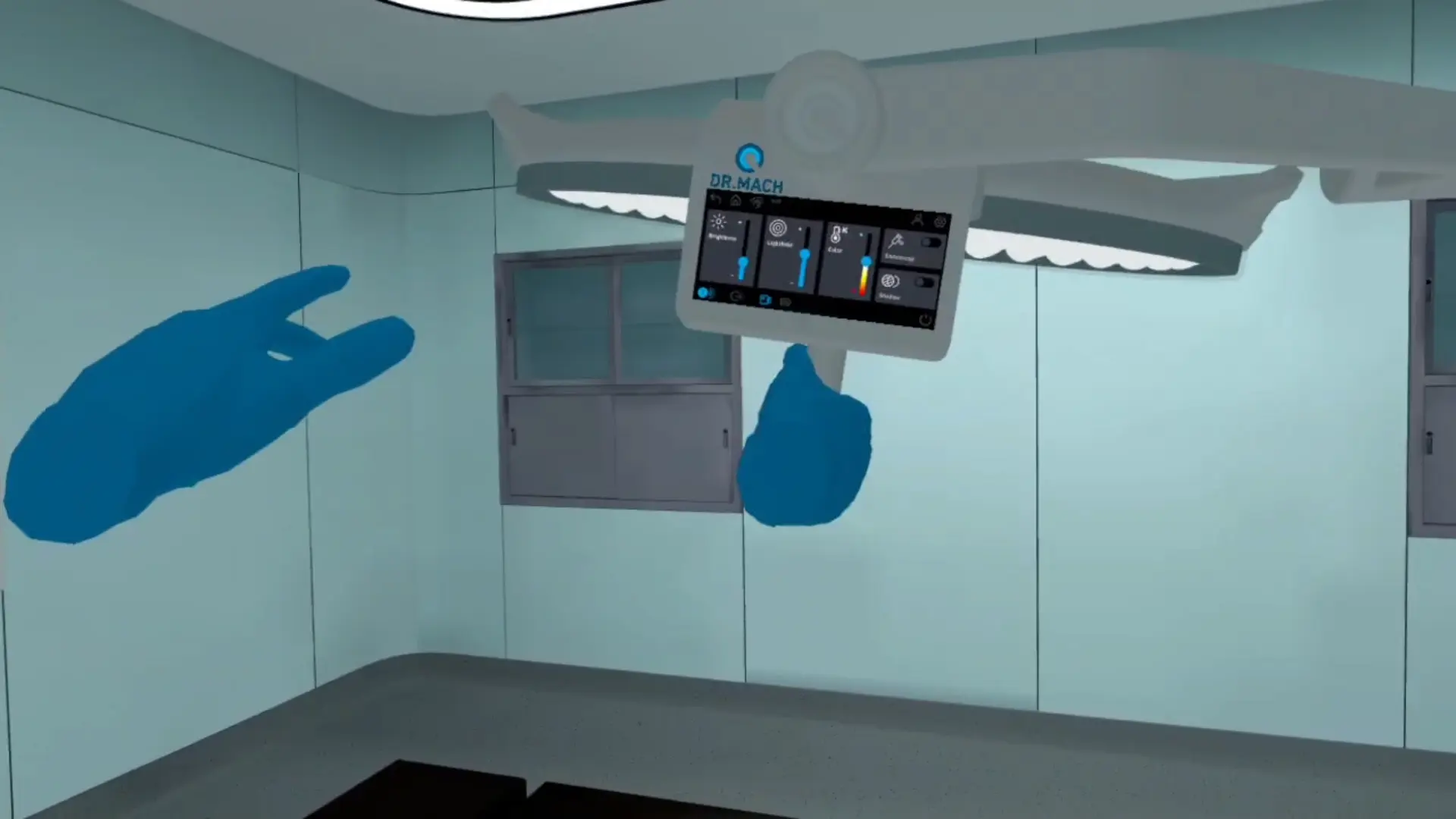
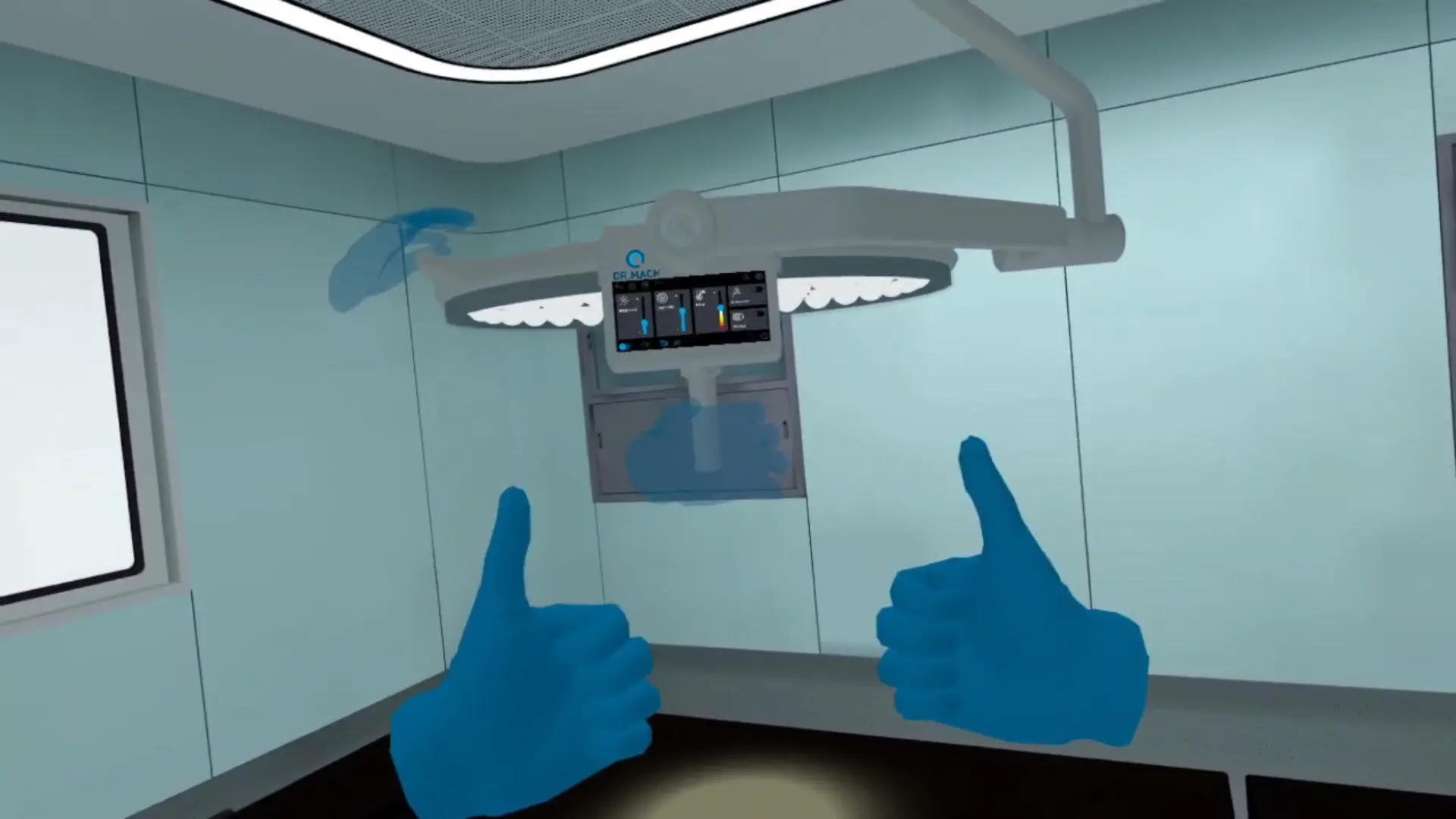
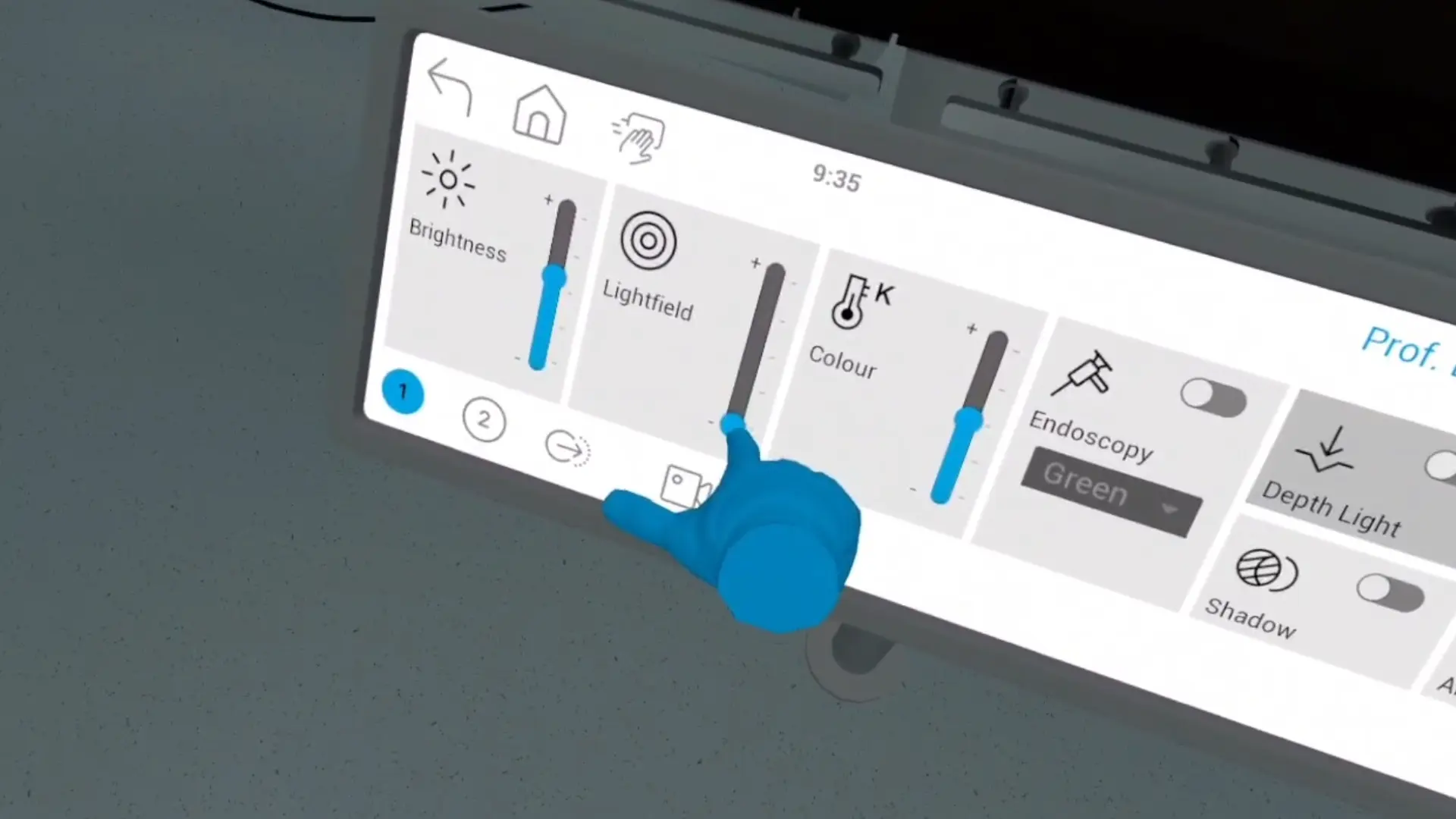
Instead of being guided through a scripted explanation, they are able to explore the product for themselves. This creates a more natural and far more effective learning experience.
The result is a stronger connection between the customer and the product, along with a clearer understanding of its value.
If you would like to see how a similar approach could be applied to your product, we would be happy to walk you through what is possible.
Contact UsExtending the Impact Beyond Demonstration
What made this approach particularly effective was not just the ability to demonstrate the product, but the flexibility it introduced into how and where that demonstration could take place.
The experience could be used across multiple contexts, from sales meetings and exhibitions to internal training and partner engagement. This removed the dependency on physical setups and allowed the product to be presented consistently in any environment.
It also changed the nature of the conversation. Instead of explaining features step by step, teams could allow customers to explore and ask more specific questions based on what they were seeing. This created more meaningful discussions and a clearer alignment between the product and the customer's needs.
Over time, this kind of approach can influence not just how products are marketed, but how they are understood across an entire organisation.
Improving Product Understanding Through Experience
One of the most consistent challenges in product marketing is helping customers understand not just what a product is, but how it behaves in the real world.
Traditional content often struggles to achieve this. Even detailed videos and demonstrations are limited by perspective. They show what the product looks like, but not what it feels like to use.
Virtual reality changes this by giving customers control over the experience.
Instead of being guided through a fixed narrative, users can explore freely. They can focus on the elements that matter most to them, revisit specific features, and build their own understanding at their own pace.
This has a direct impact on how products are perceived. When customers can explore something themselves, they are more likely to trust what they are seeing. The experience feels less like marketing and more like discovery.
It also leads to more informed decisions. When customers understand a product properly before committing, they are less likely to hesitate, and more likely to move forward with confidence.
This is where virtual reality becomes more than just a marketing tool. It becomes a way to support better conversations, clearer communication, and stronger alignment between product and customer.
Virtual Reality Compared to Traditional Approaches
Traditional product marketing relies on explanation. It presents information and expects the customer to interpret it correctly.
Virtual reality removes that barrier. It allows the customer to experience the product directly, reducing uncertainty and improving clarity.
It also removes many of the practical limitations associated with physical demonstrations. Products do not need to be transported, environments do not need to be recreated, and experiences can be delivered consistently across different locations and audiences.
How to Introduce Virtual Reality into Your Product Marketing Strategy
Adopting virtual reality does not require a complete transformation of existing marketing processes. In most cases, it works best when introduced in a focused and practical way.
The starting point is identifying where traditional communication methods fall short. This is often where products are difficult to explain, where demonstrations are resource intensive, or where customers struggle to visualise how something works in practice.
From there, it becomes a question of designing an experience that solves that specific problem. The goal is not to replicate every aspect of a product, but to focus on the elements that are hardest to communicate through other means.
Many organisations begin with a single use case, such as a product demonstration or sales tool, before expanding into other areas. This allows teams to understand how the technology fits into existing workflows and how it can support both marketing and sales functions.
It is also important to consider how the experience will be used. In some cases, it will be guided by a sales team. In others, it may be used independently by customers. Designing for clarity and ease of use ensures that the experience delivers value regardless of how it is accessed.
When implemented in this way, virtual reality becomes a practical extension of existing marketing activity rather than a separate initiative.
Challenges and Considerations
While virtual reality offers clear advantages, it is important to recognise that it is not without challenges.
One of the most common concerns is cost. Creating high-quality immersive experiences requires an upfront investment in both development and design. However, this needs to be considered in the context of long-term use. Unlike physical demonstrations, which require ongoing resources, virtual experiences can be reused and scaled over time.
There are also practical considerations around hardware. While access to VR headsets has improved significantly, organisations need to think about how experiences will be delivered and who will be using them. In many cases, this involves balancing accessibility with the level of immersion required.
Another factor is experience design. Simply placing a product in a virtual environment is not enough. The experience needs to be intuitive, focused, and aligned with the needs of the user. Poorly designed experiences can create confusion rather than clarity.
Despite these challenges, adoption continues to grow as the technology becomes more accessible and the benefits become clearer. For many organisations, the question is no longer whether to explore virtual reality, but how to implement it effectively.
When It Makes Sense to Use Virtual Reality
Virtual reality becomes increasingly valuable as products become more complex and more difficult to demonstrate.
It is particularly effective when understanding depends on interaction, when the environment plays a key role, or when customers need to build confidence before making a decision.
In these situations, providing a clear and immersive experience can significantly improve both engagement and outcomes.
Looking Ahead
Virtual reality is becoming an increasingly important tool for how companies communicate, sell, and engage with their customers.
As adoption continues to grow, expectations will shift. Customers will begin to expect more interactive and immersive experiences, particularly when evaluating complex products.
At the same time, companies will gain deeper insight into how customers engage with their products, allowing them to refine and improve how those products are presented.
The direction is clear. Marketing is moving towards experience.
Conclusion: Final Thoughts
The way a product is presented has a direct impact on how it is understood.
Virtual reality provides a way to close the gap between explanation and experience. It allows companies to communicate complexity more clearly, engage customers more effectively, and support better decision making.
As products continue to evolve, the methods used to present them must evolve with them.
"As products become more complex, the way we communicate them needs to evolve. Virtual reality allows us to move beyond explanation and into experience, and that is where real understanding happens."
Let's talk
Interested in a VR product demonstration?
If you sell complex products that are difficult to demonstrate, VR could transform your sales process. Let's explore what's possible.
Contact Us