Blog
How Life-Science Students Get Real Lab Practice Without the Lab: A VR Training Case Study
This post looks at what the research says about VR for practical skills training, and how Ewha Womans University is using it to give life science students access to laboratory practice they couldn't otherwise get.
Quick Answer
Virtual lab practice uses VR to put students inside realistic laboratory simulations where they can perform experiments, handle equipment, and repeat procedures as many times as needed — without competing for access to physical equipment. A 2024 meta-analysis of 37 STEM studies found a significant moderate effect on practical skill development (g = 0.48). Ewha Womans University used this approach to give life-science undergraduates hands-on training in procedures that were previously inaccessible due to equipment constraints.
The Problem: Why Life-Science Students Struggle to Get Enough Lab Time
Practical skills are central to a life-science education. Pipetting, animal handling, electrophysiology, cell culture technique — these are not theoretical concepts. They are physical skills that require repetition, feedback, and real equipment to develop properly.
The problem is that most universities cannot offer that repetition at scale. Laboratory equipment is expensive, shared, and often occupied by postgraduate research. Timetabling constraints limit when and how often undergraduates can access facilities. Safety requirements mean that high-risk procedures must be supervised, which adds further constraints on capacity.
The result is that many life-science students graduate with a narrower range of practical experience than their curriculum implies. They have read about techniques they have never performed. They have been assessed on procedures they have only observed.
This gap between knowledge and practical competence has real consequences — for how students perform in early career roles, for how confident they feel applying for research positions, and for how well prepared they are for postgraduate laboratory work.
g = 0.48
effect size of VR on practical skills (STEM meta-analysis, 37 studies)
94%
of experienced lab staff said VR gave real practical experience (CDC pilot)
5%
gain in STEM major retention at ASU after VR lab implementation
What Is Virtual Lab Practice and How Does It Work?
Virtual lab practice uses virtual reality to place students inside a realistic simulation of a laboratory environment. Rather than watching a demonstration or reading a protocol, students perform the procedure themselves — in a fully interactive digital setting that responds to their actions.
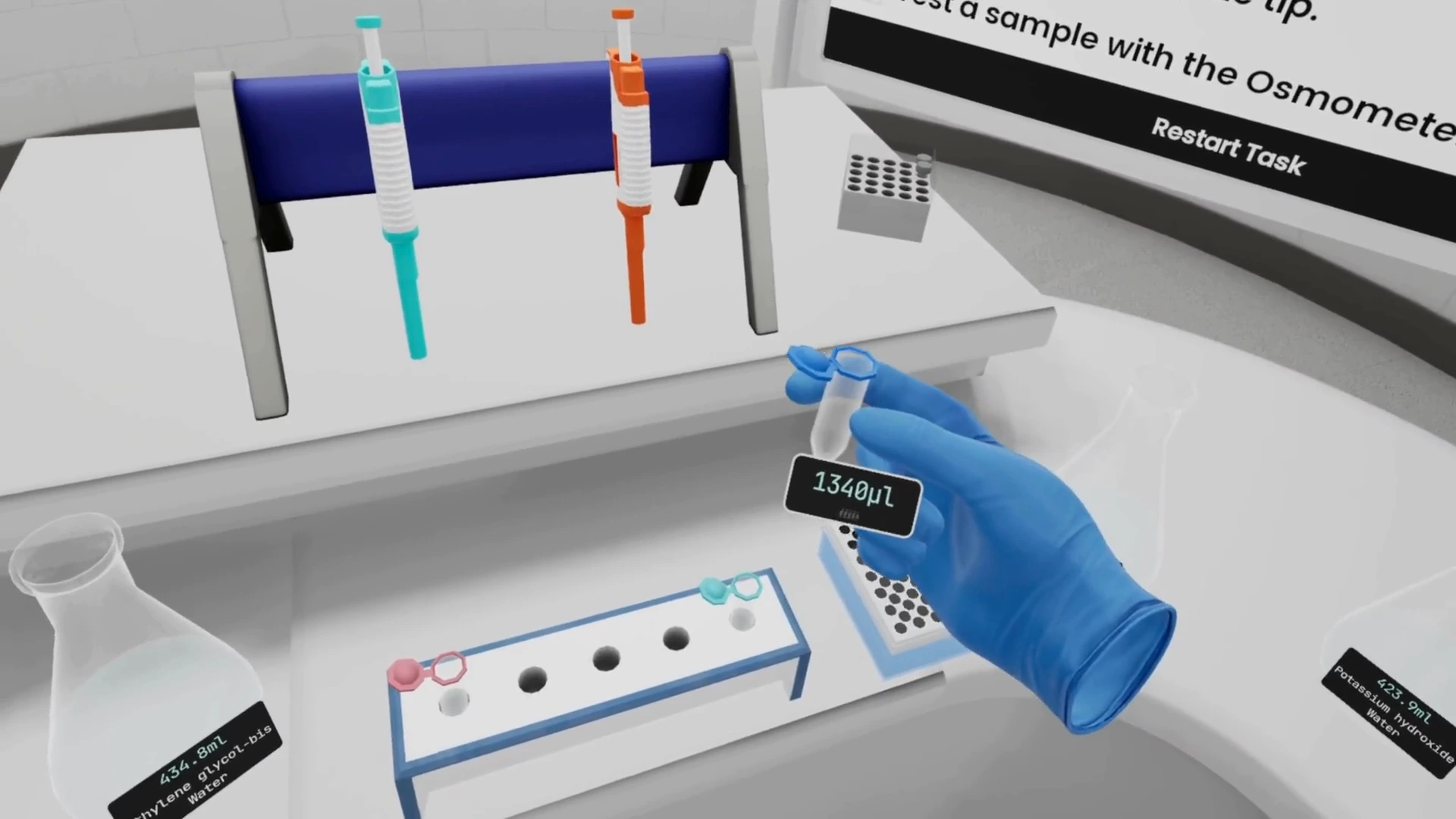
This means a student can pick up a pipette, calibrate it, draw up a sample, and dispense it into a plate — all using natural hand movements tracked by a VR headset. If they make an error, the simulation responds realistically. They can reset and repeat immediately, without wasting reagents or waiting for a supervised session.
The key distinction from video or e-learning is interactivity. Virtual lab practice is not passive. Students are making decisions, performing movements, and receiving feedback — exactly as they would in a physical lab, but without the access constraints.
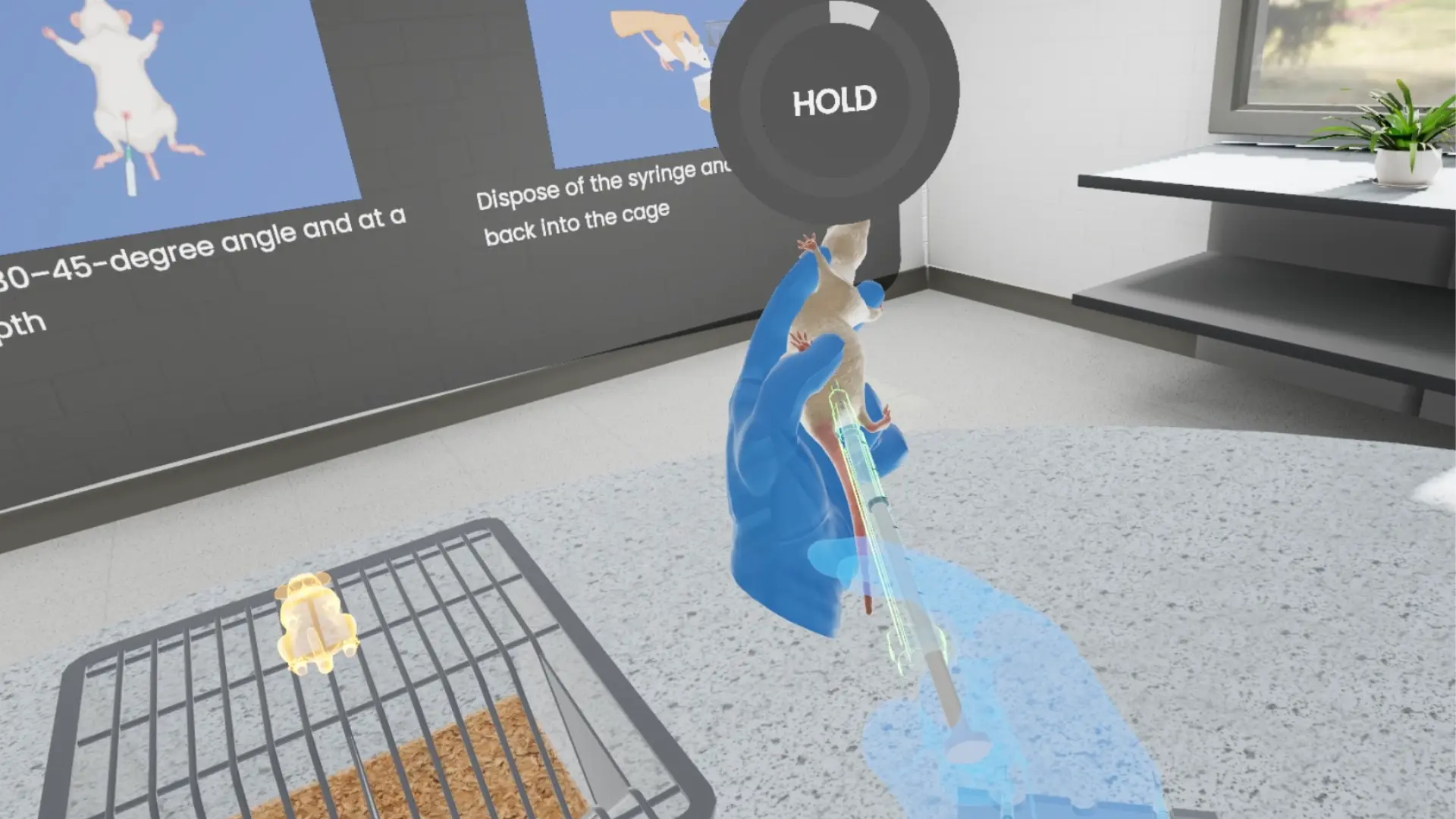
This also means that high-risk or resource-intensive procedures — those involving hazardous materials, expensive reagents, or live animals — can be practised safely and repeatedly before a student ever enters the real laboratory.
What the Research Says About VR Lab Training for Students
Virtual lab practice is not a new idea, but the evidence base for it has grown substantially in recent years. Three bodies of evidence are particularly relevant for university life-science departments considering adoption.
STEM meta-analysis: a moderate, significant effect on practical skills
A 2024 meta-analysis published in the International Journal of STEM Education synthesised 37 empirical studies on the impact of virtual reality on practical skill development in science and engineering education. The analysis found a significant moderate positive effect, with an effect size of g = 0.48.
The moderator analysis found that the disciplinary category significantly influenced outcomes, with medical and life-science students demonstrating the largest improvements. This aligns with the specific challenges those disciplines face around equipment access and supervised practical time.
CDC biosafety cabinet pilot: 94% said VR gave real practical experience
The United States Centers for Disease Control and Prevention (CDC) developed a VR training module for biosafety cabinet technique — one of the most fundamental and frequently required skills in any life-science laboratory. The module was pilot-tested with 59 CDC staff members.
Of the 23 participants who had worked with biosafety cabinets for more than one year, 94% agreed that the VR training gave them genuine practical experience. The pilot led to increased funding for a dedicated VR learning team at the CDC, and the module is now publicly available on the Meta Quest platform.
Arizona State University: improved grades and STEM retention at scale
Arizona State University conducted a two-year study tracking more than 4,000 students who completed VR biology labs as part of their introductory science curriculum. Students who took the VR labs improved their final course grade by approximately a quarter of a letter grade compared to students who had not taken them, and scored higher in advanced 300-level biology courses.
The retention effect was also significant. Before the VR programme, 29% of Biology 181 students switched out of the School of Life Sciences. After implementation, only 24% did — a 5 percentage point retention gain in STEM majors.
Case Study: How Ewha Womans University Solved the Lab Access Problem with VR
Ewha Womans University in Seoul, South Korea, is home to the Department of Brain and Cognitive Sciences — South Korea's first undergraduate programme dedicated to brain and cognitive sciences. Professor Jeiwon Cho and Professor Sanggeon Park, experts in electrophysiology and animal behaviour respectively, faced a challenge that is common to research-led universities worldwide.
The challenge they faced
The department's laboratory equipment was consistently occupied by graduate student research. This is the reality at most research universities: the equipment that undergraduates need to learn on is the same equipment that postgraduates depend on for their research. Timetabling both groups into the same space is not feasible.
As a result, undergraduates in the department had limited access to hands-on training in the practical techniques they needed to develop. Procedures involving animal handling and electrophysiology — central to the department's research focus — were particularly difficult to provide at the volume required for meaningful skill development.
"Our laboratory's electrophysiology equipment was consistently occupied by graduate students' research, making it impractical to offer hands-on experience to undergraduates. Additionally, acquiring separate equipment solely for teaching purposes proved financially unfeasible. We also struggled with spatial constraints for conducting animal behaviour experiments with nearly twenty students per class, while addressing crucial laboratory safety protocols and animal ethics considerations."
What clear_pixel VR built
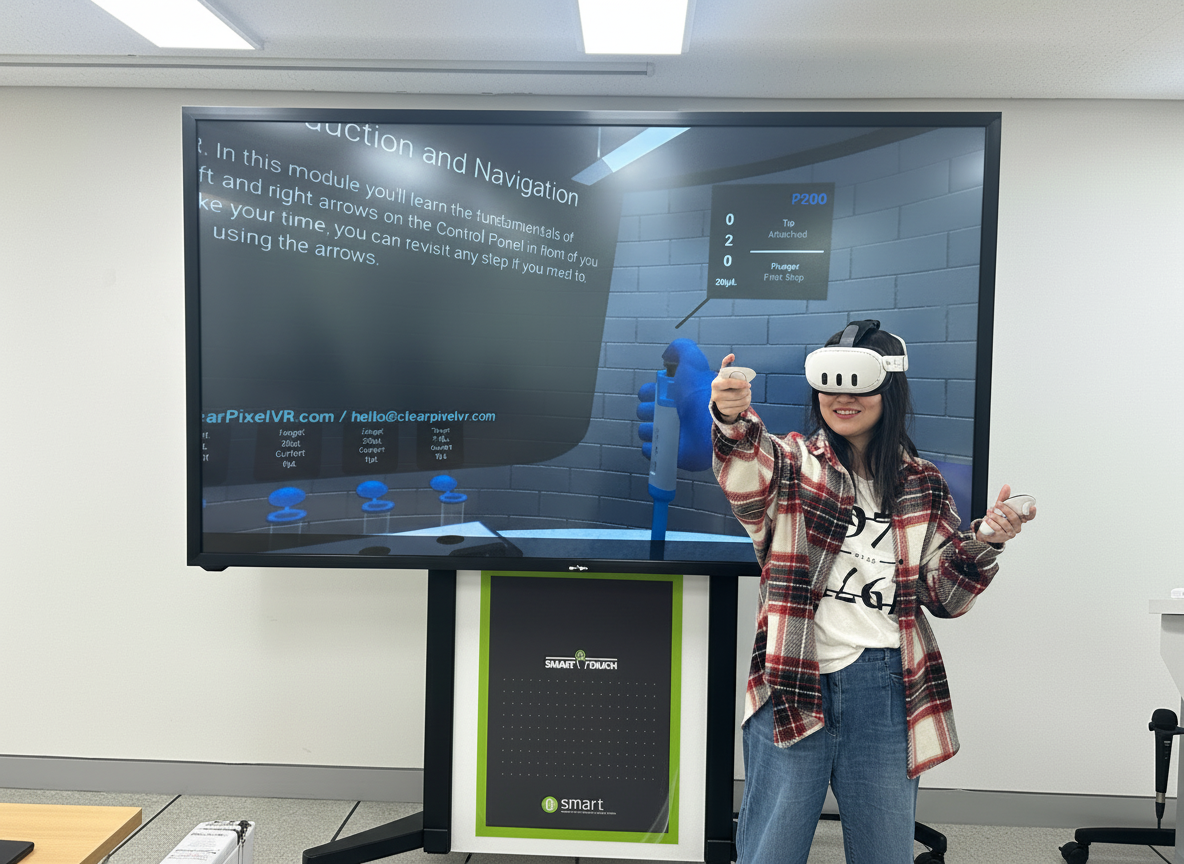
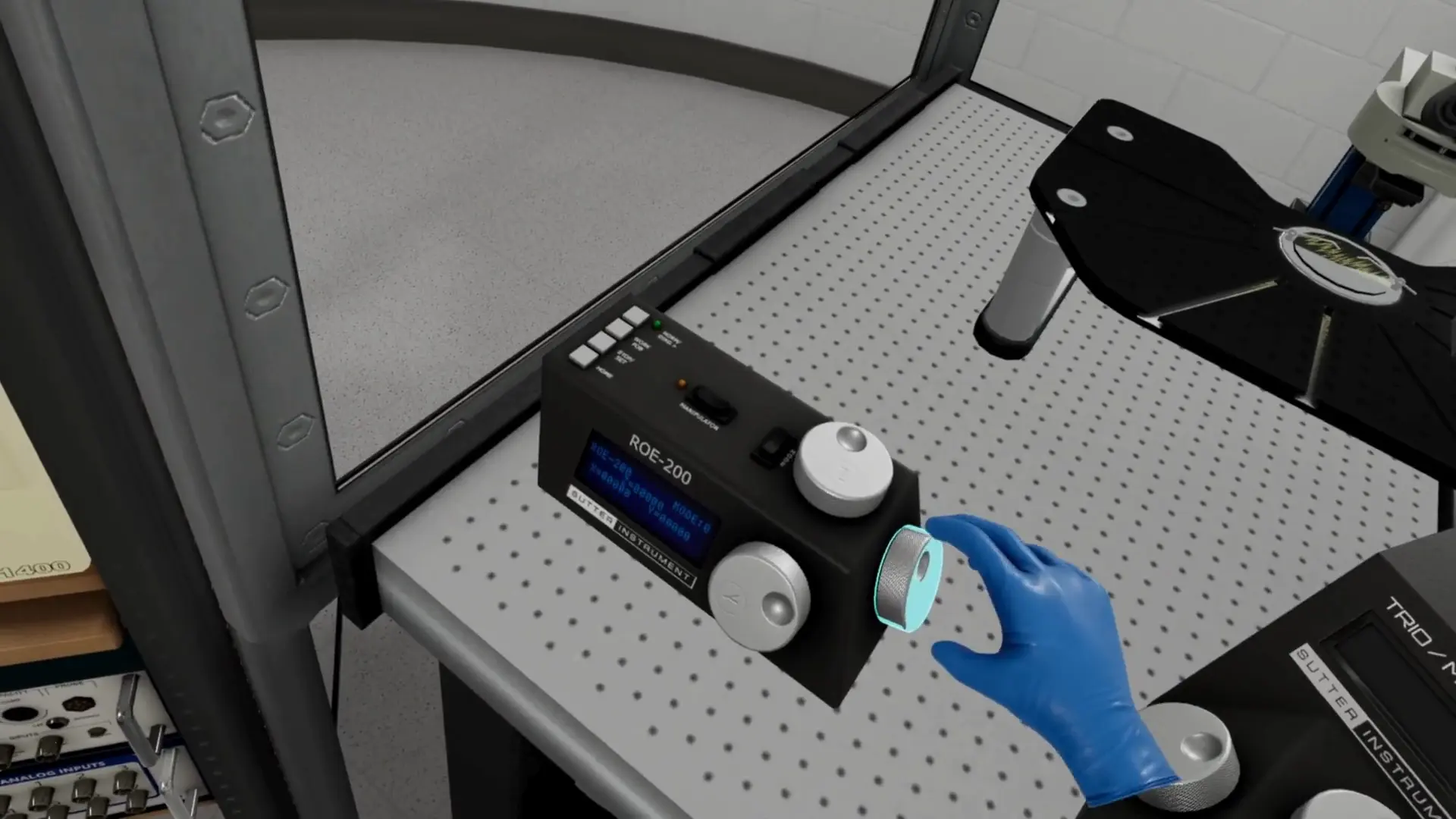
clear_pixel VR developed a virtual lab training experience that places students inside realistic simulations of the laboratory procedures they need to master. The experience covers the practical techniques most constrained by equipment access — including handling protocols, procedural sequences, and the decision-making required at each stage of a laboratory workflow.
The simulations are designed around active participation, not passive observation. Students perform each step themselves, receive immediate feedback on their technique, and can repeat procedures as many times as needed without resource cost or scheduling constraint.
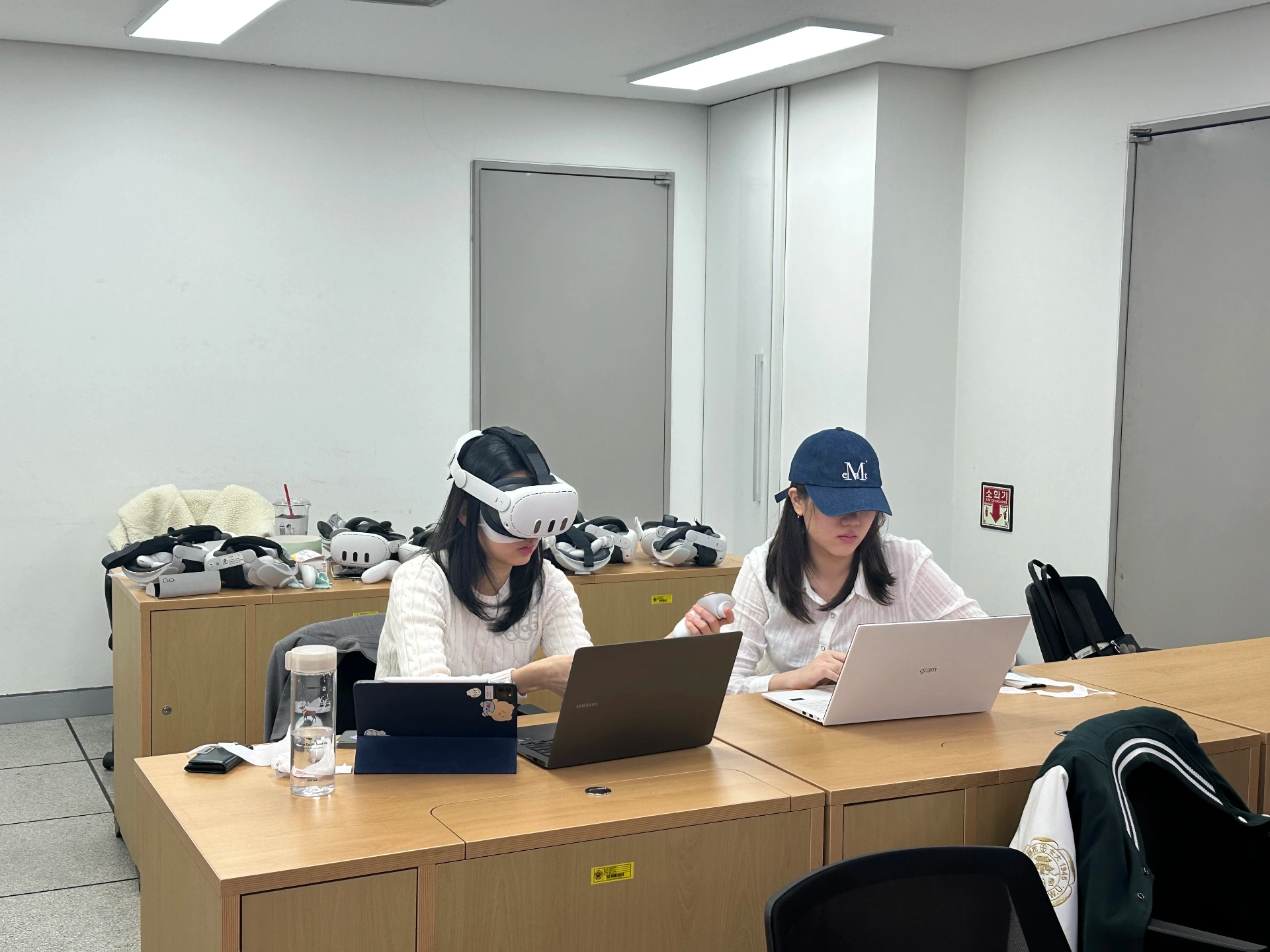
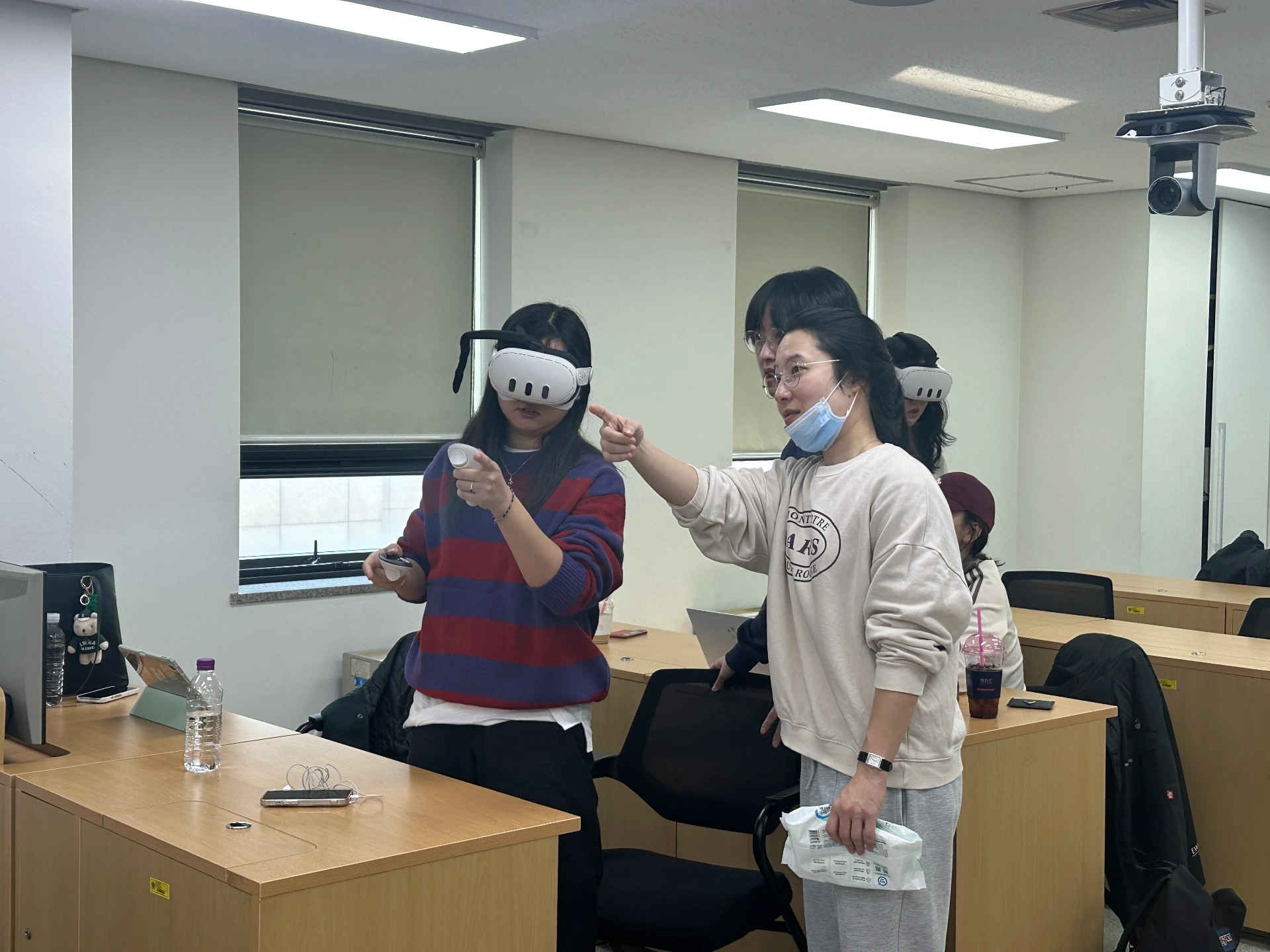
The experience runs on standalone VR headsets, making it accessible without dedicated VR infrastructure. Students can use it in any space — including their own accommodation — outside of formal teaching time.
How the university uses it
The VR training is used as a complement to existing teaching rather than a replacement for physical laboratory sessions. Students develop foundational technique and procedural familiarity in VR before progressing to supervised laboratory time. This means that when they do access physical equipment, they are already competent in the procedural steps — making those sessions more productive and reducing the risk of errors or reagent waste.
The approach also allows the department to provide a consistent baseline of practical experience across its entire undergraduate cohort, regardless of how much laboratory time any individual student has been able to access.
When Virtual Lab Practice Works Best
VR lab training is most valuable in contexts where one or more of the following is true:
- Access to physical equipment is limited. If lab sessions are oversubscribed, equipment is shared with research teams, or timetabling constraints reduce the number of practical sessions available, VR extends the reach of practical teaching without requiring additional equipment.
- Procedures are high-risk or resource-intensive. Techniques involving hazardous materials, live animals, or expensive reagents are difficult to practise at volume in a physical lab. VR removes those constraints and allows unlimited repetition.
- Students need to build confidence before supervised sessions. Students who enter a physical lab already familiar with a procedure make fewer errors, waste fewer materials, and make more effective use of supervised time.
- The institution needs scalable, consistent delivery. A single VR experience can be used by every student in a cohort, in any location, with no additional cost per session.
It does not replace physical laboratory work. Tactile feedback, the real weight of equipment, and the sensory experience of a live laboratory are not fully replicable in VR. But as a tool for building procedural familiarity, confidence, and foundational technique before supervised sessions, the evidence for its effectiveness is now substantial.
Conclusion
The practical skill gap in life-science education is not a consequence of poor teaching. It is a consequence of real resource constraints — equipment availability, timetabling, safety requirements, and the competing demands of a research-led department.
Virtual lab practice does not resolve those constraints. But it extends the reach of practical teaching beyond what physical access alone can provide. Students get more repetitions, more exposure to procedures, and more opportunity to build competence — before they ever compete for time in the physical lab.
Ewha Womans University found a practical solution to a problem that most life-science departments face. The same approach is applicable wherever equipment access limits the practical experience a university can offer its students.
"This platform serves as an excellent educational tool, particularly for departments with limited access to laboratory equipment and adequate space for conducting experiments."
Related Reading
Sources
- International Journal of STEM Education (2024) — The impact of virtual reality on practical skills in science and engineering education: a meta-analysis
- CDC / OneLab REACH — Virtual Reality Laboratory Training
- Inside Higher Ed (2025) — ASU's Required Virtual Reality Lab Boosted Grades, Retention
- ASU News (2025) — Large-scale study reveals true impact of ASU virtual reality initiative on national science education
- Business News Wales — Welsh Startup Takes Virtual Reality Tech to South Korean University
- Frontiers in Education (2024) — Adding immersive VR laboratory simulations to traditional teaching enhances biotechnology learning outcomes
- APHL Blog — What do virtual reality training opportunities bring to laboratory professionals?
Let's talk
Talk to us about developing a virtual lab training experience for your institution.
We build VR training that gives students practical experience without the equipment access constraints. Let's explore what's possible.
Contact Us