Platforms
Mouse handling & site injection virtual reality training
A VR training platform that prepares researchers for mouse handling and injection techniques — ethically, safely, and without live animals.
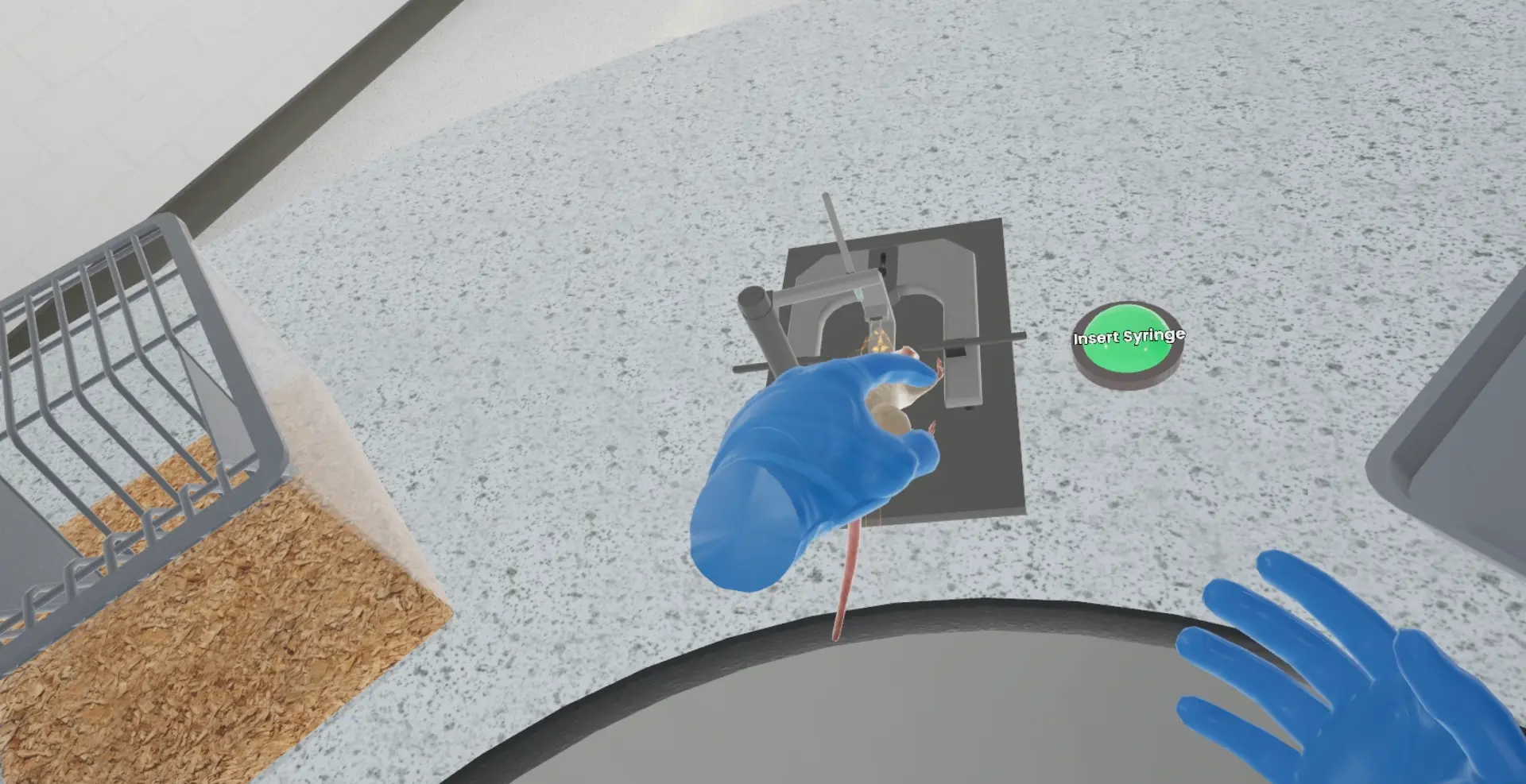
Key points
- Mouse handling and injection techniques are mandatory competencies for life science researchers — yet they are traditionally only taught through supervised sessions with live animals.
- Our VR platform lets trainees build foundational skills in a safe, pressure-free environment before their first supervised live session — reducing animal stress, improving trainee confidence, and supporting the 3Rs.
- The simulator covers scruffing, restraint, transfer, and intraperitoneal, subcutaneous, and tail vein injection techniques, with accurate anatomical models and real-time feedback.
- Animal welfare modules are integrated throughout — trainees learn to recognise signs of distress and understand their ethical obligations alongside the physical techniques.
- The platform is designed to complement — not replace — supervised live animal training, creating better-prepared, more confident researchers before live access is granted.
- Aligns with FELASA B, ASPA, and institutional training requirements, with assessment modules designed to support competency sign-off preparation.
The challenge of scaling animal handling training ethically
Animal handling competency training presents a genuine ethical dilemma: the only way to practise the techniques is on live animals — yet inexperienced trainees are more likely to cause distress or harm. The result is a tension between the need to train and the obligation to minimise animal use and suffering.
Current training programmes rely heavily on supervised live sessions, which are expensive, resource-intensive, and limited in frequency. Trainees receive relatively few opportunities to practise before being assessed, meaning confidence and competency at the point of sign-off vary significantly between individuals.
VR pre-training addresses this by allowing trainees to practise the physical mechanics of handling and injection repeatedly before touching a live animal — arriving at supervised sessions already familiar with the movements, reducing both trainee anxiety and animal stress.
Proven in practice
Our VR platforms are used in leading universities
See how Ewha Womans University adopted our VR training platforms into their curriculum and the outcomes they achieved for students and staff.
Platform features
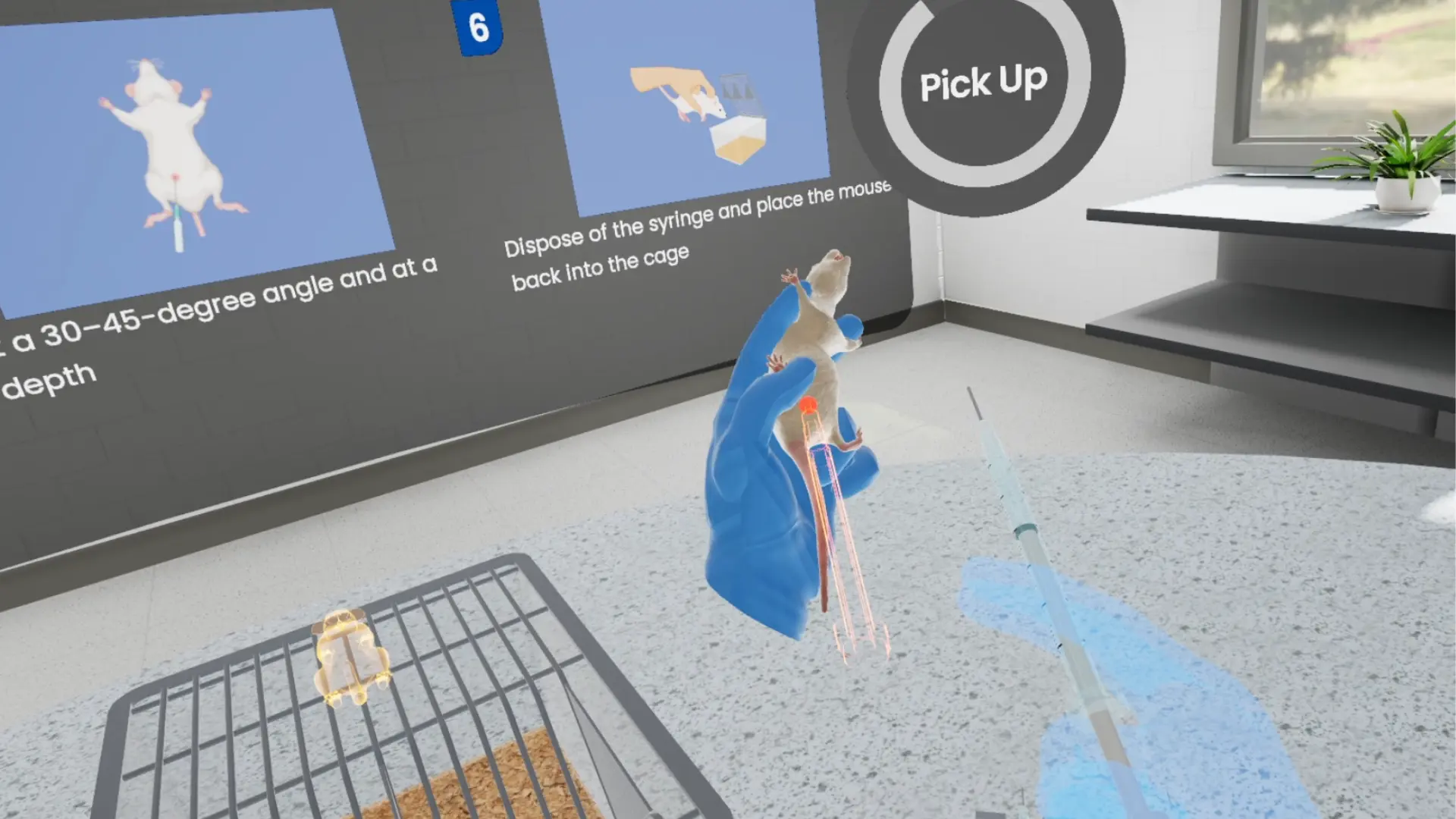
Scruffing technique
Master correct scruffing posture and grip using VR controllers — with real-time feedback on hand position, restraint quality, and animal comfort indicators to build safe, confident handling before live sessions.
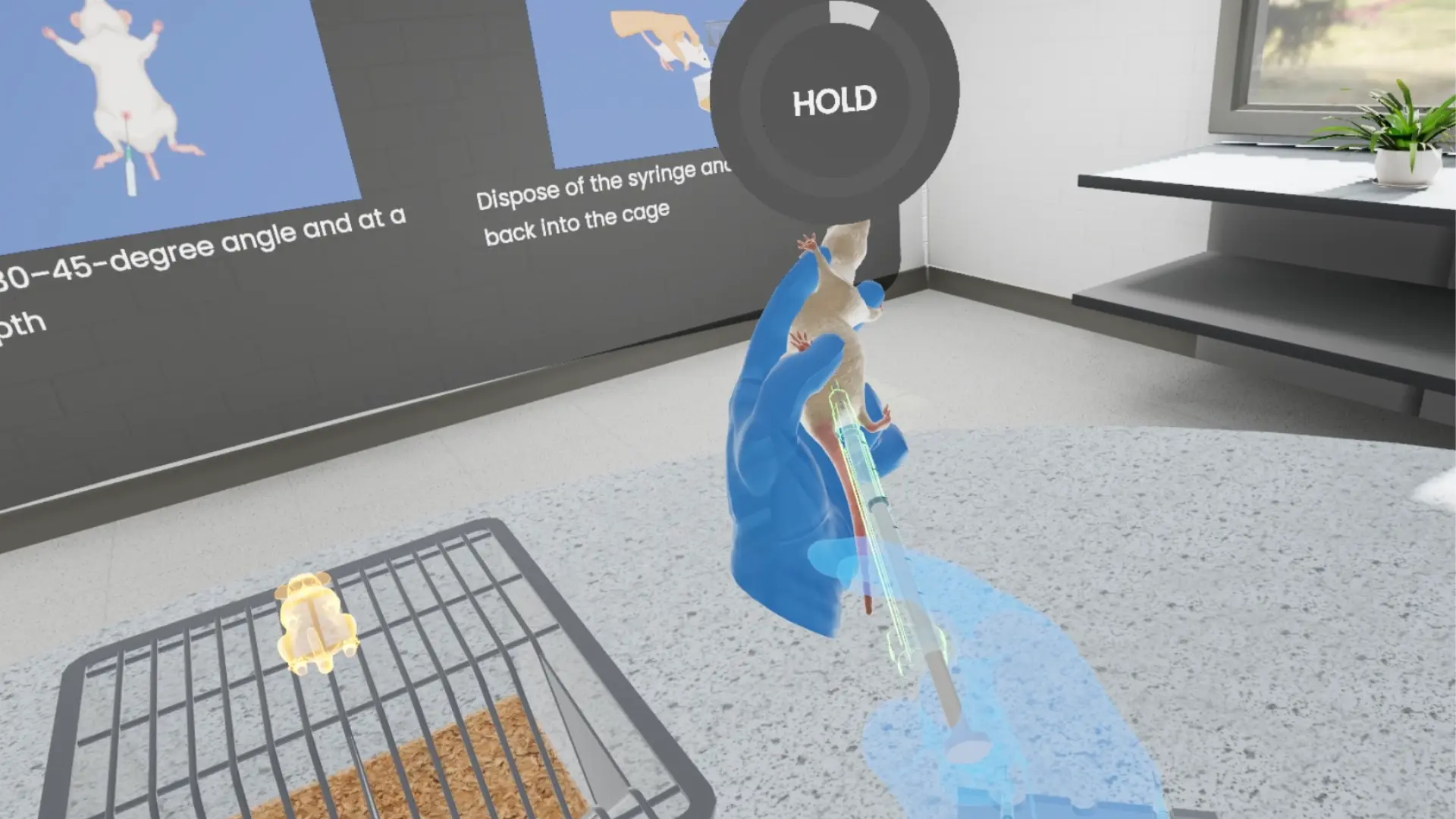
Intraperitoneal injection
Practise IP injection on an accurate virtual mouse model, covering correct needle angle, insertion site, aspiration check, and volume delivery with step-by-step guided feedback throughout.
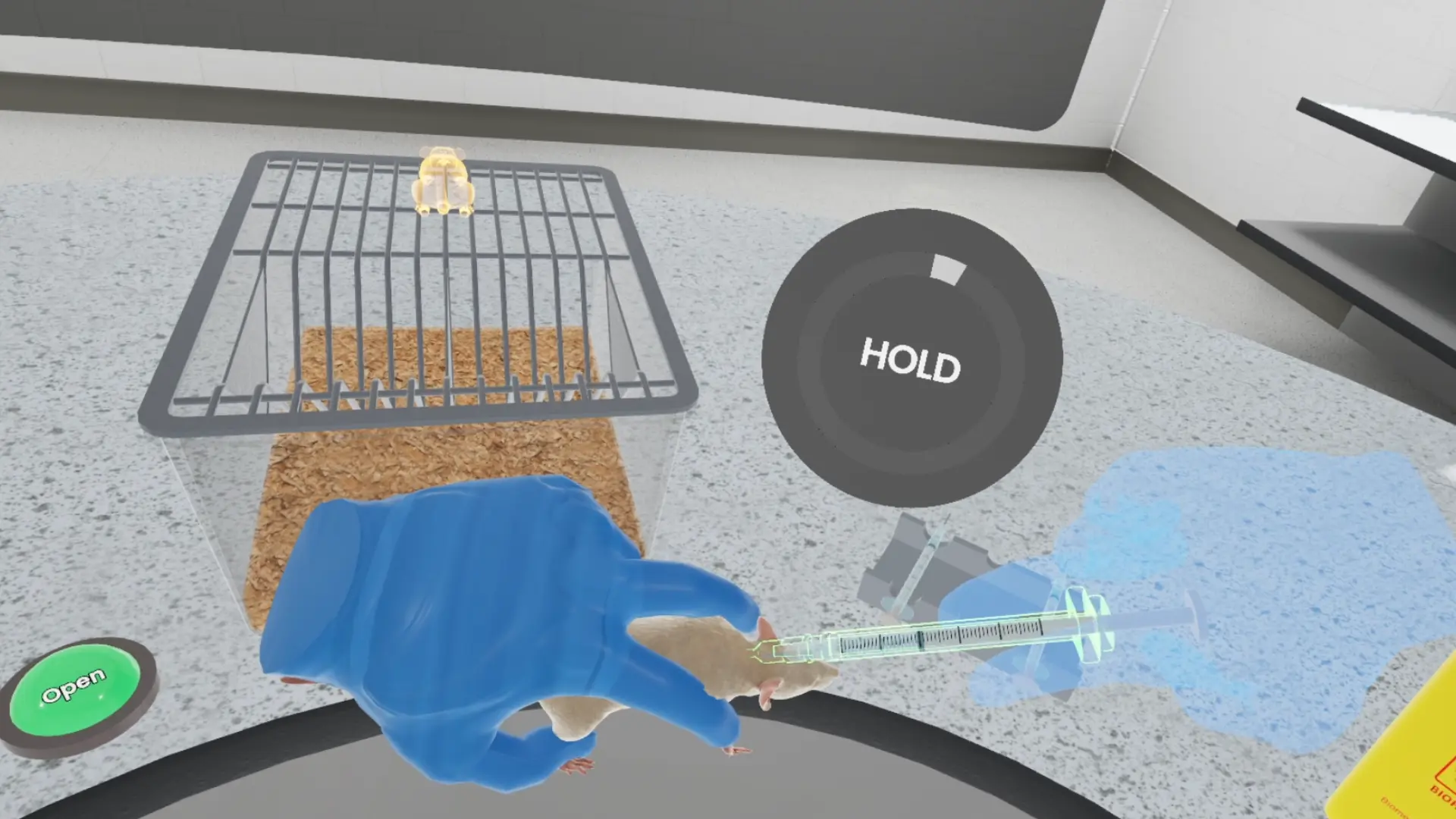
Subcutaneous injection
Learn correct SC injection technique including tent formation, needle insertion angle, and slow steady delivery — with visual and haptic cues reinforcing proper form at each stage.
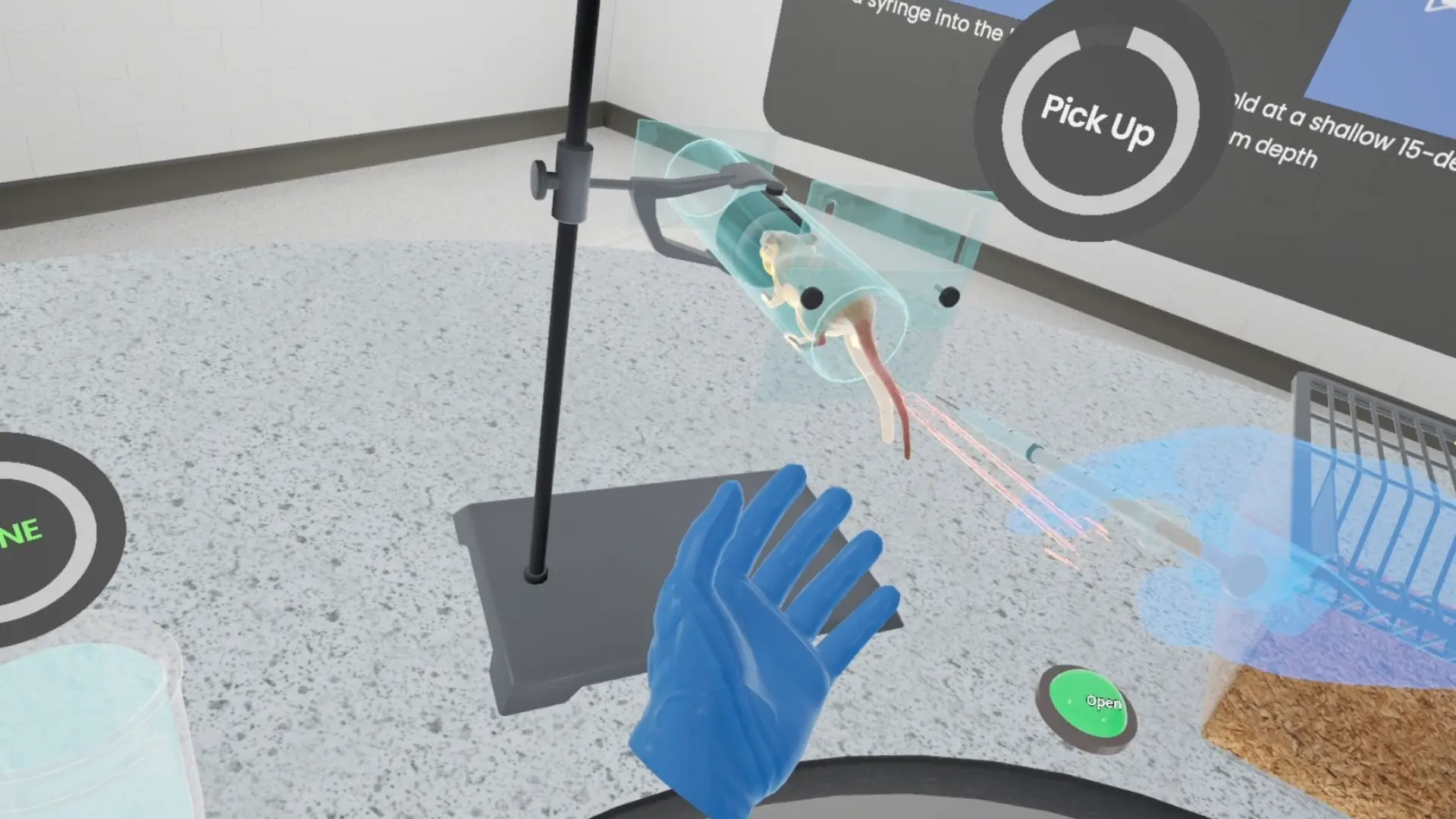
Intravenous injection
Guided training for tail vein IV injection, covering warming, vein location, needle angle, and confirmation of correct placement — all practised repeatedly before any live animal contact.
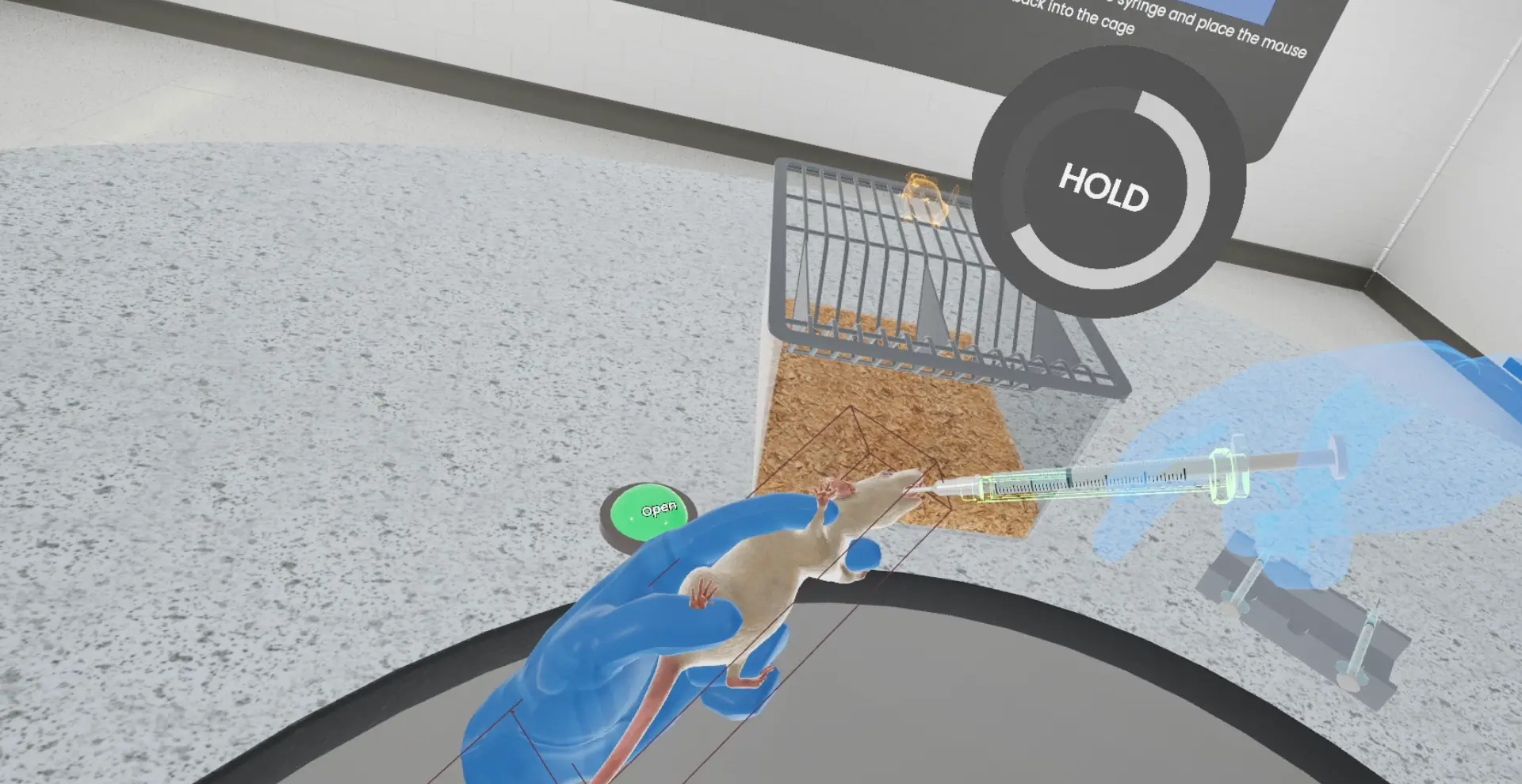
Oral gavage
Step-by-step oral gavage training covering correct tube selection, animal positioning, measured passage of the gavage needle, and volume delivery — with feedback on technique at every step.
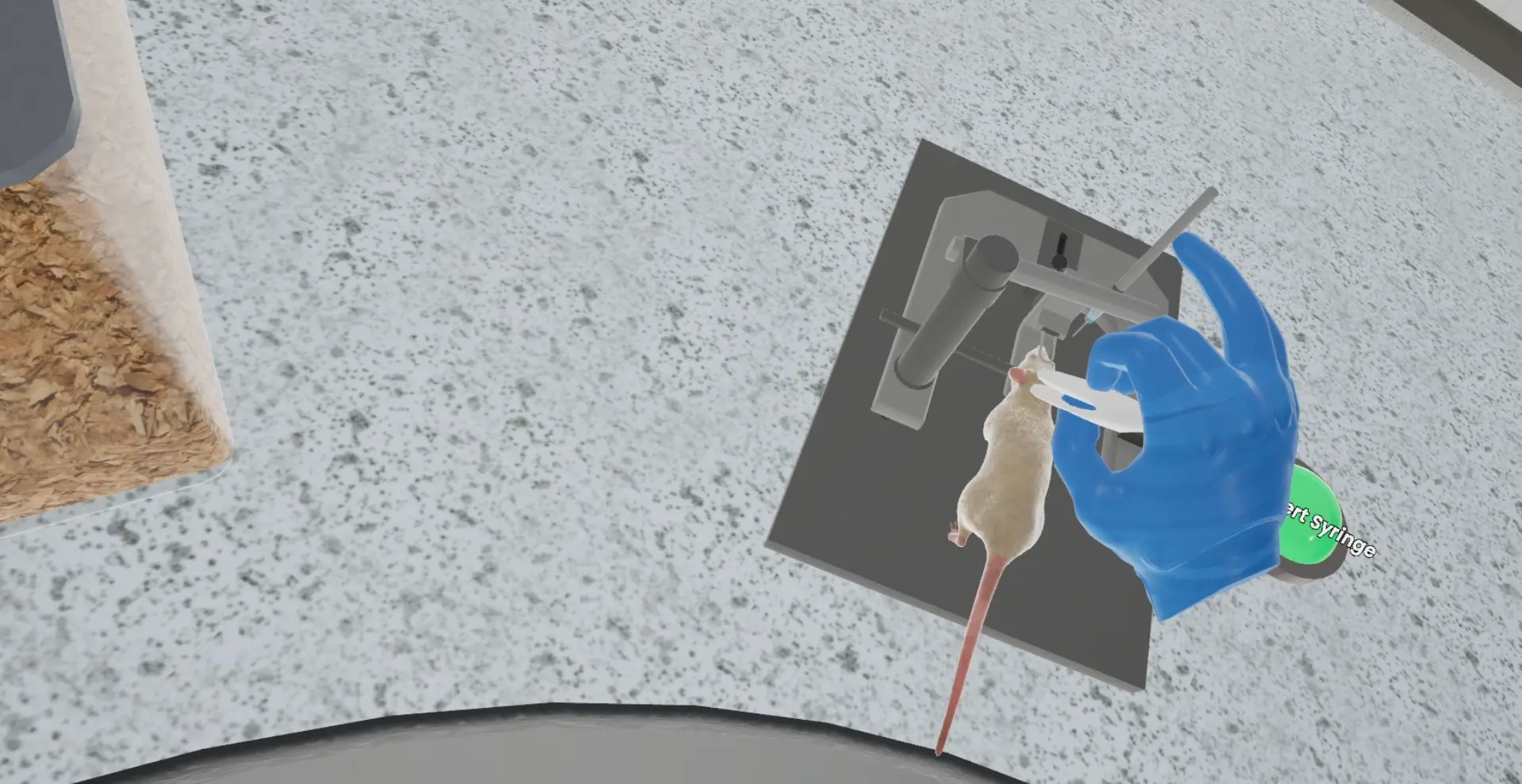
Intracranial injection
Practise stereotaxic intracranial injection in VR, including correct head fixation, coordinate targeting, needle depth control, and slow infusion — building precision before performing the procedure on live animals.
VR pre-training vs. traditional approach
Traditional training only
- ✗First contact with techniques is on live animals
- ✗High trainee anxiety reduces learning quality
- ✗Animal stress is higher with inexperienced handlers
- ✗Limited sessions constrain repetition opportunities
- ✗Supervision costs scale with trainee numbers
VR pre-training + supervised sessions
- ✓Trainees arrive at live sessions already competent in mechanics
- ✓Significantly reduced trainee anxiety and confidence barriers
- ✓Reduced animal stress — better-prepared handlers
- ✓Unlimited repetition before live animal access is granted
- ✓Fewer supervised sessions needed per trainee
Want to bring this to your organisation?
Get in touchWho this platform is for
Designed for universities, research institutes, CROs, and pharmaceutical organisations that train researchers in in vivo techniques.
Undergraduate research students
Build foundational handling skills and welfare understanding before supervised lab work begins.
Postgraduate researchers
Practise specific techniques — particularly injections — before performing them on live animals.
Named Animal Care & Welfare Officers
Use as a standardised pre-assessment tool to verify trainee readiness before supervised live sessions.
New research staff
Onboard new team members with consistent, documented training before granting unsupervised animal access.
FELASA & institutional training programmes
Complement existing course modules with interactive pre-practical preparation for technical procedures.
Pharmaceutical & CRO labs
Standardise animal handling competency training across distributed research sites.
Supporting ethical and consistent training
VR pre-training doesn't replace supervised live animal work — it makes it better. Trainees who have already rehearsed the physical mechanics of handling and injection arrive at supervised sessions calmer, more coordinated, and more aware of their animal welfare obligations.
The result is fewer handling errors, less animal stress, and a faster path to competency sign-off — benefiting trainees, supervisors, and the animals in their care.
Get started
Ready to improve your animal training programme?
Talk to us about how this platform can be integrated into your existing training pathway and adapted to your institutional requirements.
Contact Us