Quick Answer
When a product is too large, too complex, or too environment-dependent to demonstrate in person, a virtual product demo built in VR can replicate the full experience without shipping a single unit. Dr. Mach GmbH, a manufacturer of surgical lighting systems, uses a VR product demonstration to let customers interact with their equipment inside a virtual operating theatre — adjusting lights, exploring controls, and observing real-time behaviour — without the product ever leaving the warehouse.
The Problem: Products That Cannot Be Demonstrated Traditionally
Some products are difficult to sell without being experienced. Surgical lighting systems, large industrial machinery, specialist clinical equipment — these are products where understanding comes from interaction, not description.
A brochure cannot show how a surgical light moves and balances when repositioned mid-procedure. A video cannot convey the precision of a control panel. And a static 3D render cannot communicate how equipment behaves within the specific environment it was designed for.
Yet demonstrating these products in person is rarely straightforward. Equipment of this type is typically:
- Too large or heavy to transport routinely to customer sites
- Dependent on a controlled environment — such as a clinical space — to be properly assessed
- Expensive and time-consuming to install, even temporarily for demonstration purposes
- Difficult to demonstrate consistently across different sales teams and geographies
This creates a genuine commercial problem. The products that most need to be experienced are often the ones that are hardest to put in front of a potential buyer. Sales teams rely on exhibitions, dedicated showrooms, or site visits — all of which are logistically complex and expensive to coordinate, and none of which scale easily.
~30%
higher conversion when buyers experience VR demos
22–40%
return rate reduction after virtual product experience
70%
of B2B buyers prefer VR demos over traditional methods
Why Virtual Product Demonstrations Solve This
A virtual product demonstration replaces the need to move the product by recreating it — and the environment it lives in — inside a virtual reality experience. Rather than arranging a physical demonstration, a sales team can place a prospect inside a realistic, interactive digital replica of the product and its context.
The result is a demonstration that is:
- Portable: Delivered on a standalone VR headset that fits in a carry case and can be set up in minutes, anywhere a sales meeting takes place.
- Consistent: Every customer experiences the same high-quality demonstration, regardless of who delivers it or where.
- Scalable: One experience, deployed across multiple headsets, can reach every sales team, distribution partner, and exhibition simultaneously.
- Repeatable: There is no logistical overhead for each demonstration. No equipment to transport, no installation to arrange, no setup time to budget for.
Research from industry analysts suggests that VR demonstrations can increase booth traffic at trade shows by 300–400% compared to traditional display methods, and that 48% of manufacturers are now actively investing in 3D visualisation and interactive demonstration tools for their sales teams. See our full breakdown of how companies across industries are using AR and VR for product demonstrations.
The challenge is building an experience that genuinely replicates the product — not just a visual representation, but an interactive one that communicates behaviour, usability, and context.
Case Study: Dr. Mach GmbH and Their Surgical Lighting VR Demonstration
Dr. Mach GmbH & Co. KG is a German manufacturer of high-precision surgical lighting systems. Their products are used in operating theatres and designed to meet the exacting demands of clinical environments — precise illumination, adjustable positioning, and real-time control of light parameters.
Demonstrating those capabilities is not easy. The lights are large. They require ceiling or wall mounting for proper use. And the behaviours that matter most — how the light moves, how it responds to adjustments, how it interacts with the clinical space — cannot be conveyed on a screen or in a showroom setting that does not replicate an operating theatre.
Dr. Mach partnered with clear_pixel VR to build a virtual product demonstration that would allow any potential customer to experience their surgical lighting systems without the need for a physical demonstration.
What We Built
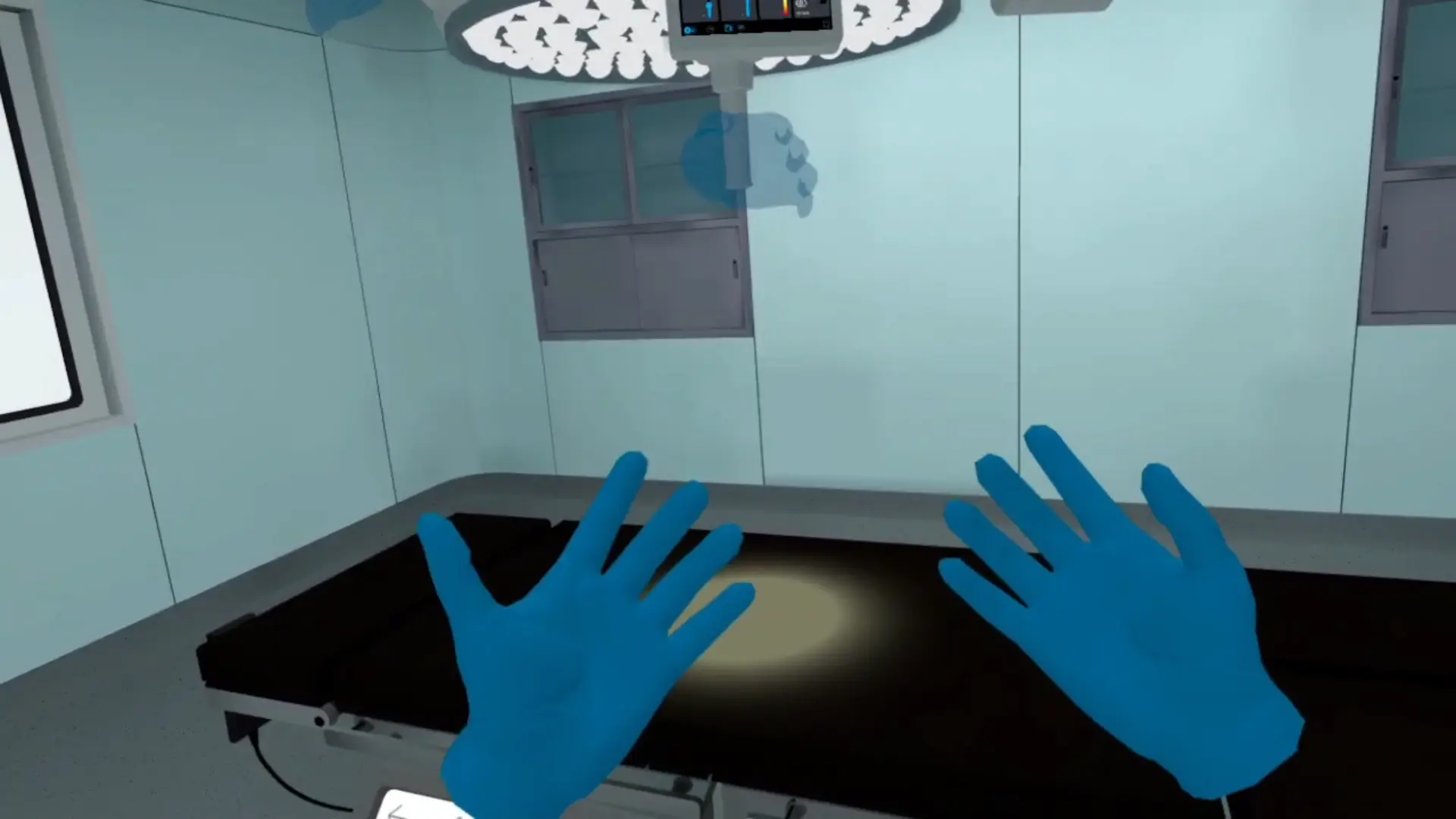
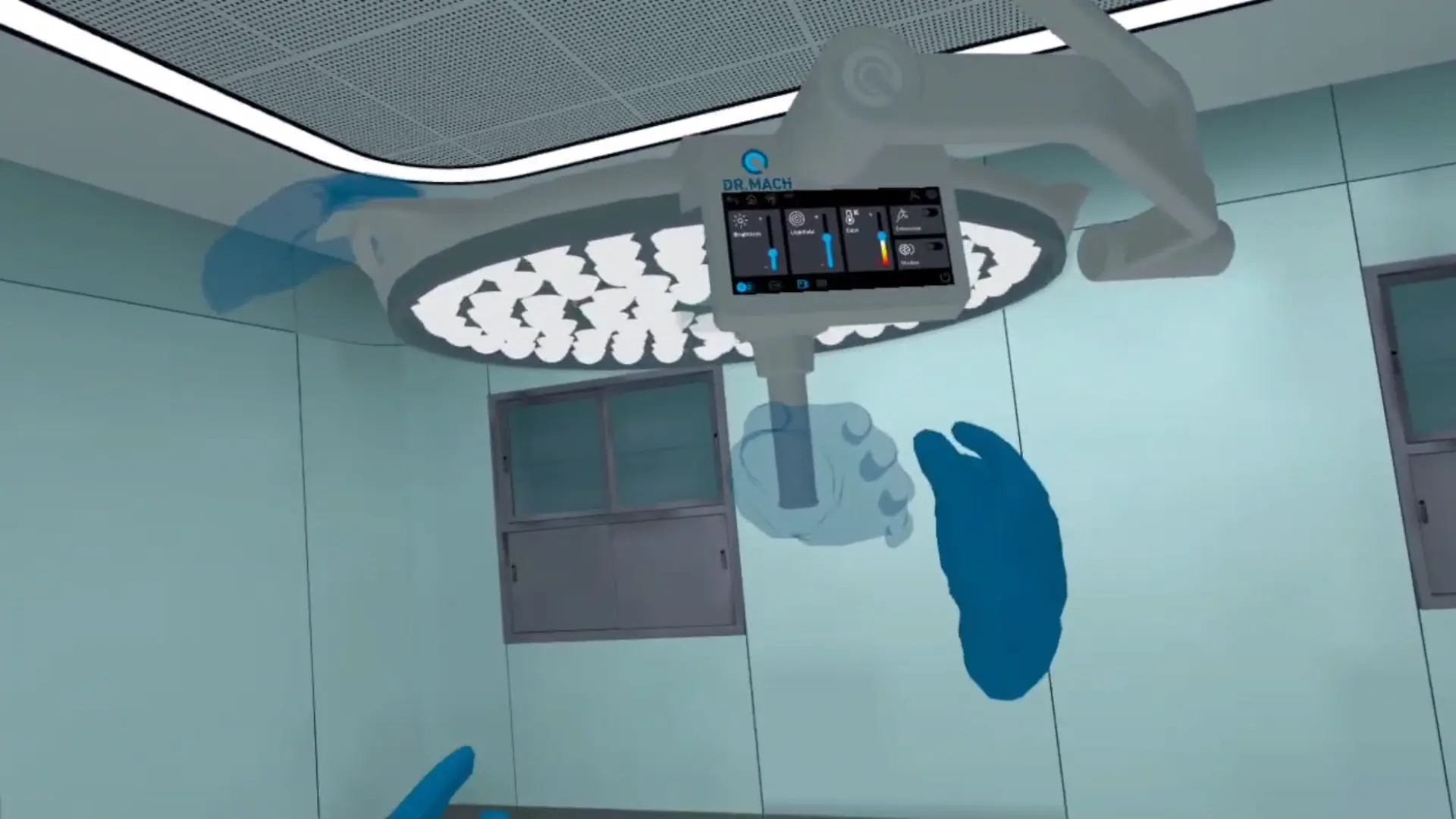
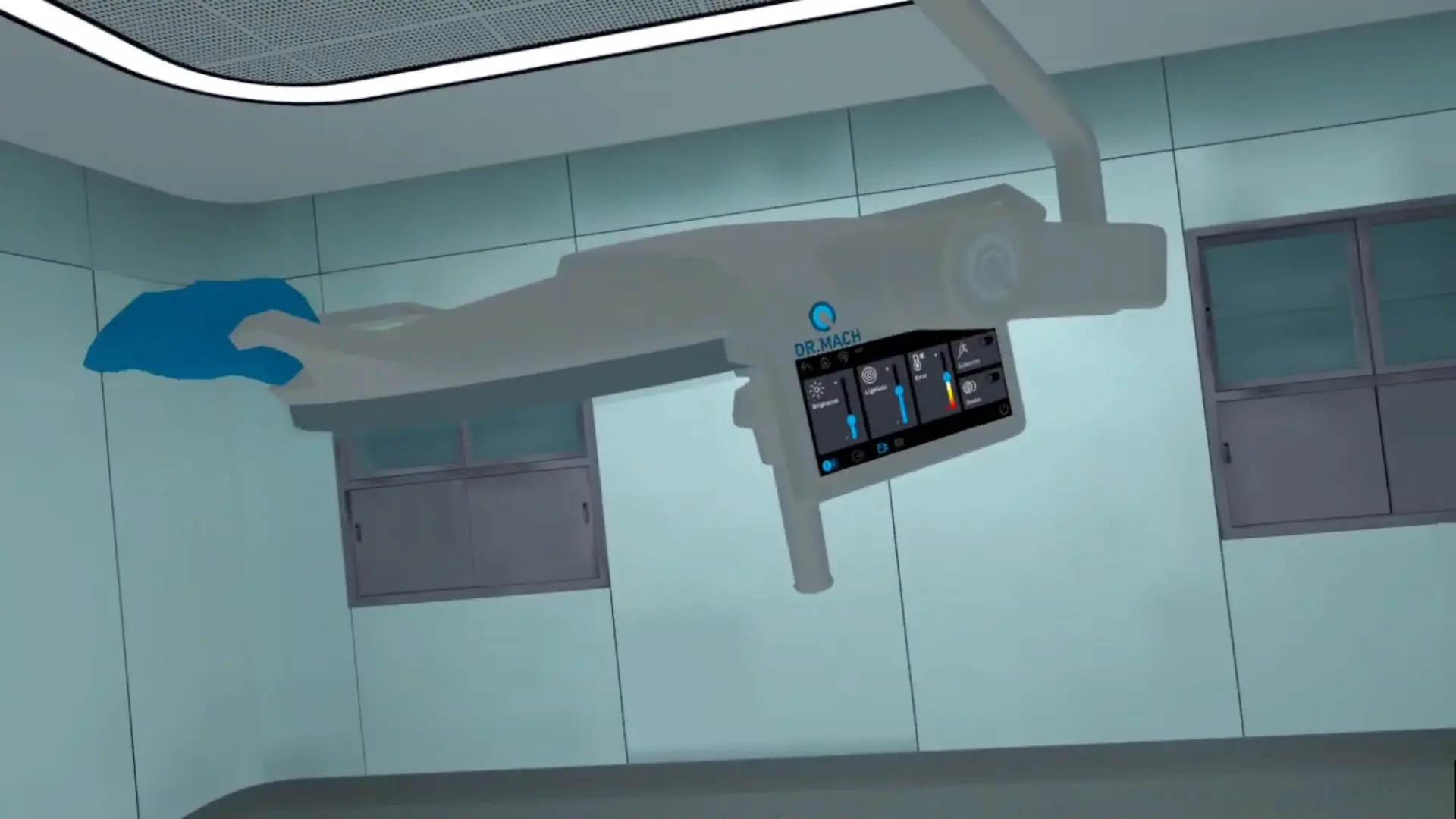
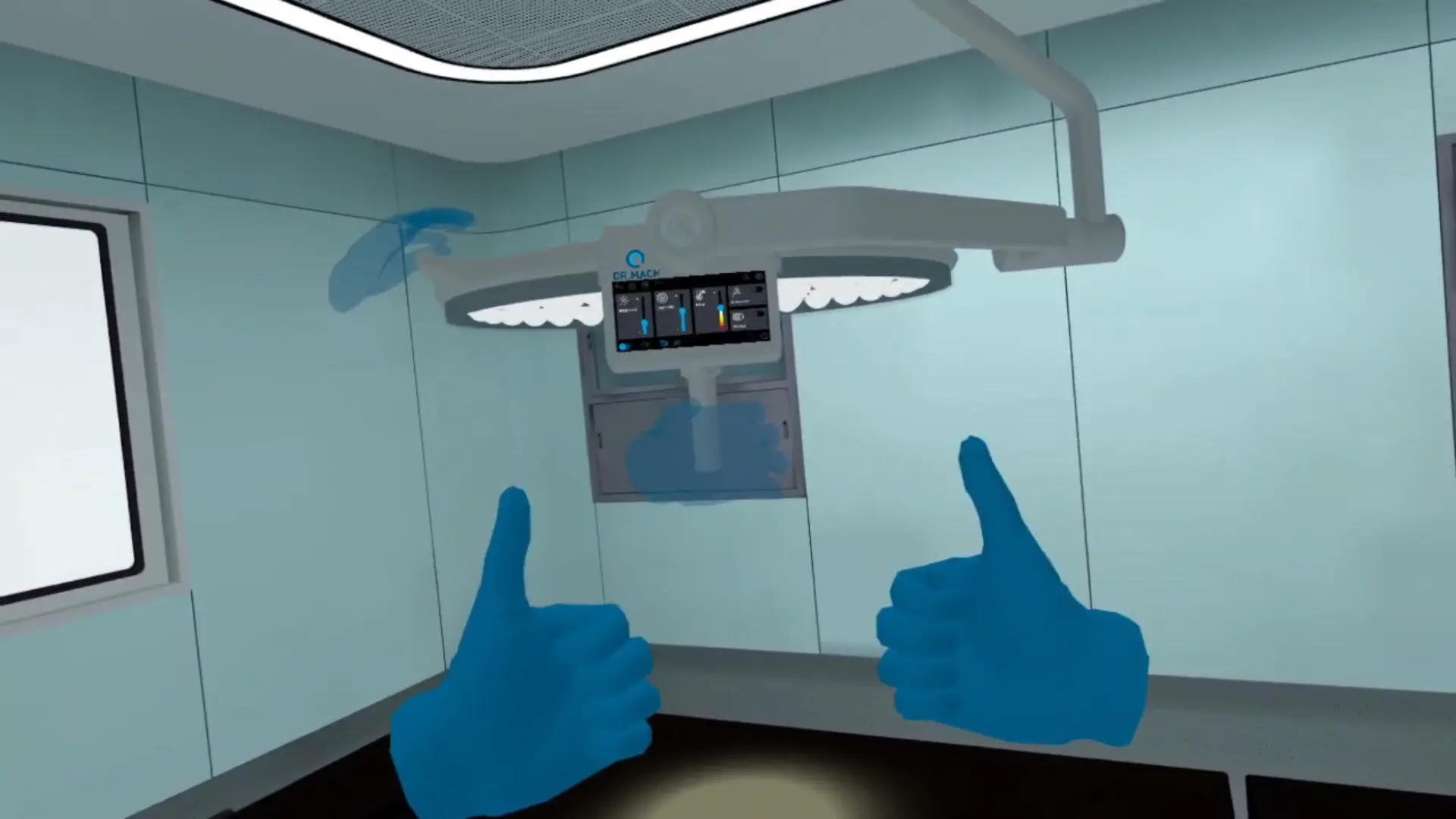
The experience places users inside a fully recreated virtual operating theatre. From there, they can interact directly with Dr. Mach's surgical lighting system using natural hand movements — reaching out, grabbing the light, and repositioning it exactly as they would in a real clinical setting.
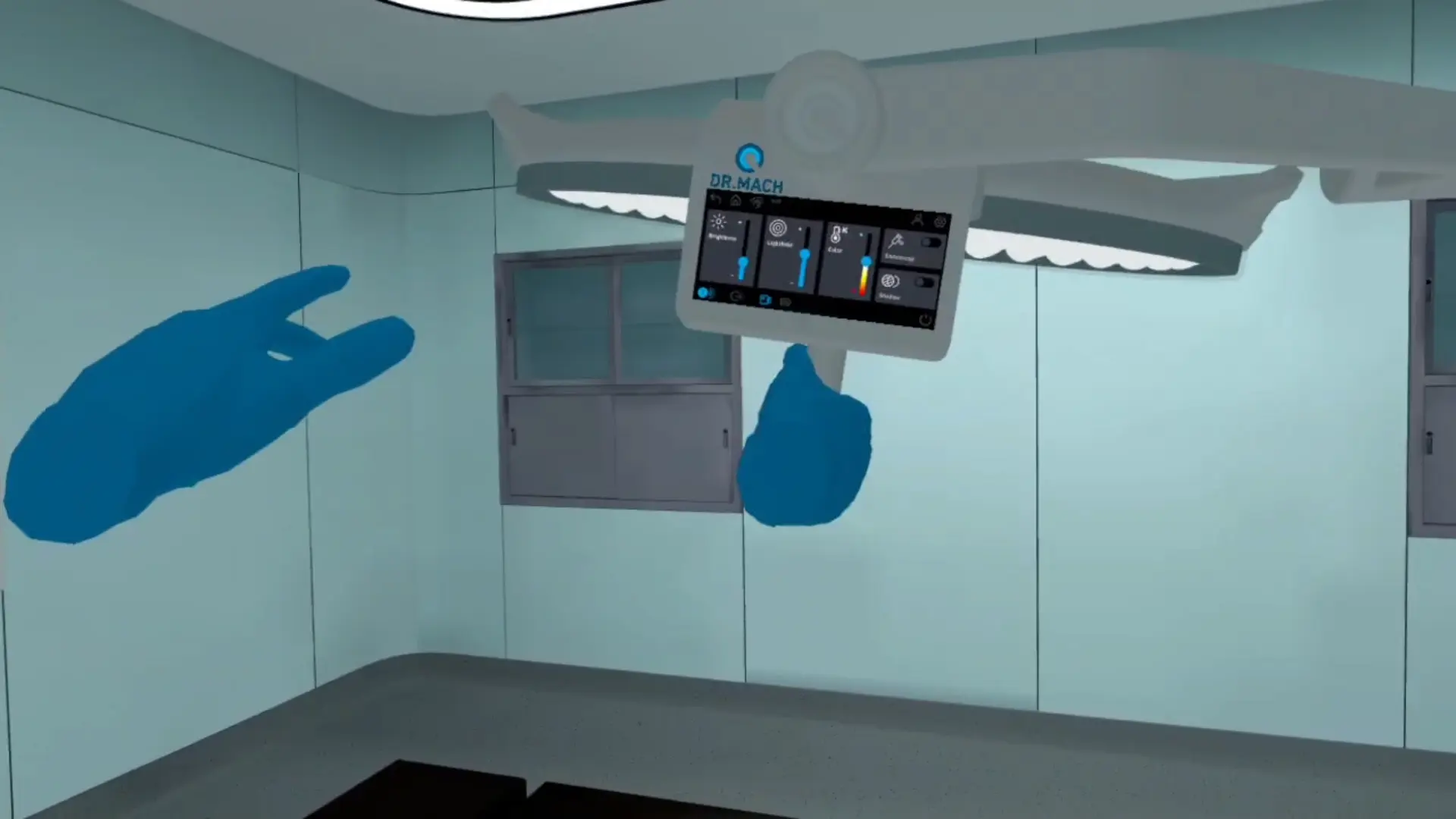
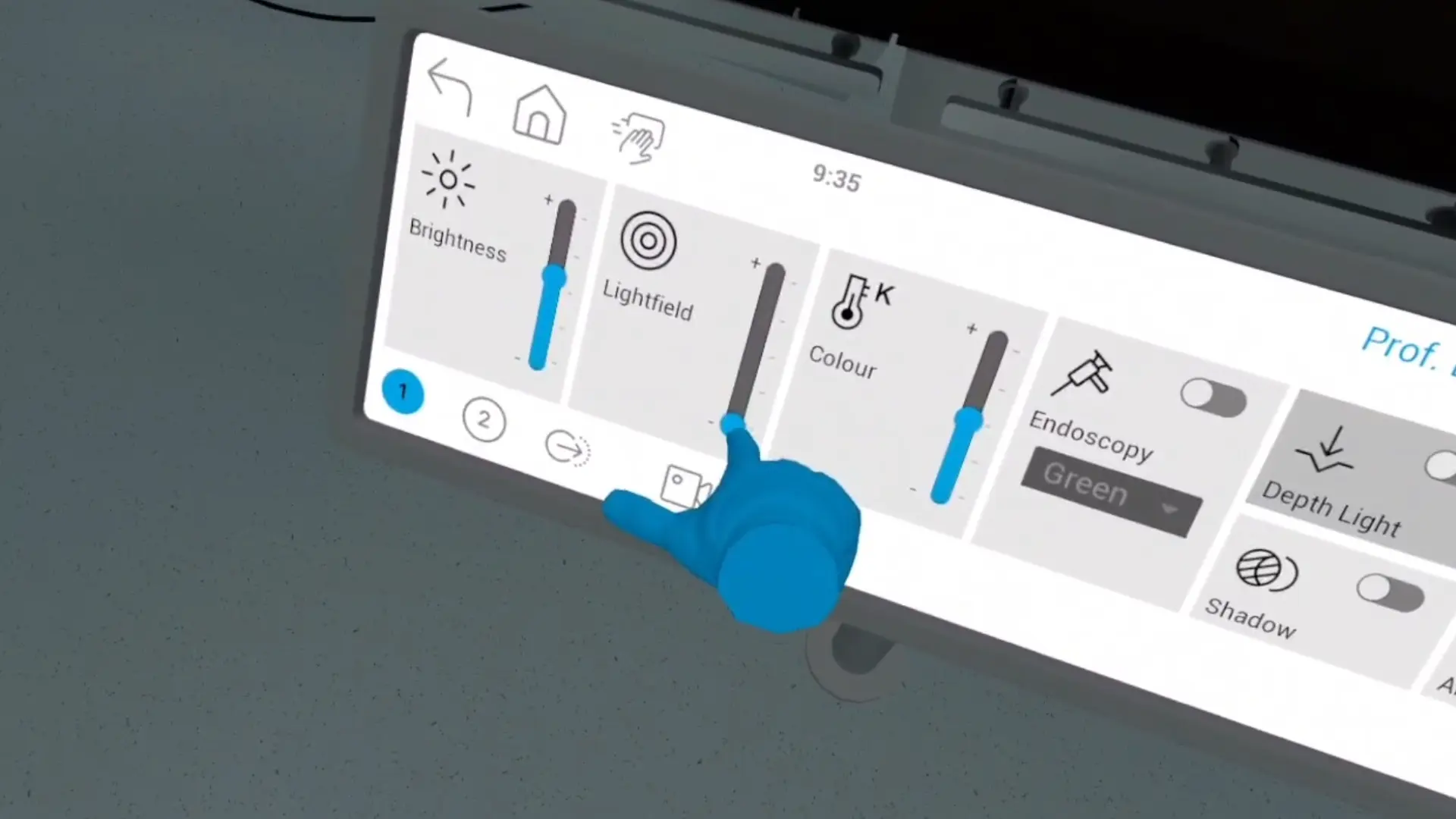
The virtual environment also includes a recreated touchscreen control panel, giving users direct control over the lighting parameters that matter most to clinical buyers:
Adjustable parameters inside the virtual demonstration:
- Lightfield brightness
- Lightfield radius
- Colour temperature
- Shadow mode
- Endolight mode
- Ambient light mode
Every adjustment produces immediate visual feedback within the virtual operating theatre. The light responds in real time, giving users a clear, intuitive sense of how the product behaves — not in a generic space, but in the clinical context it was designed for.
Recreating this accurately required significant technical work. The movement, balance, and physical behaviour of a surgical light in VR requires careful simulation — it is not simply a matter of placing a 3D model in a scene. The experience went through extensive iteration and testing to ensure that the interaction felt true to the real product.
How Dr. Mach Use Their VR Demo
The demonstration is now deployed across three Meta Quest standalone headsets, which Dr. Mach's sales and marketing teams use in multiple contexts:
- Sales demonstrations with potential customers
- Trade shows and medical equipment exhibitions
- Internal sales team training and product familiarisation
- Distribution partner briefings and customer onboarding
Each context benefits from the same core advantage: a polished, interactive product demonstration that can be delivered anywhere, without the need to arrange the physical equipment. The headsets are portable, quick to set up, and fully self-contained — making it straightforward for any team member to run a high-quality demonstration regardless of their location.
The Commercial Case for Virtual Product Demonstrations
The commercial value of a virtual product demo is clearest when considered against the alternative. For equipment manufacturers, the traditional approach to product demonstration involves one or more of the following:
- Maintaining a dedicated showroom — with the associated property, staffing, and maintenance costs
- Attending exhibitions — with stand design, logistics, travel, and setup costs
- Transporting equipment to customer sites — with freight, installation, and engineer time
All three approaches are expensive, difficult to scale, and limited in reach. A virtual product demonstration addresses each of these limitations directly.
The experience is built once and used indefinitely. Every subsequent demonstration — whether at a trade show, in a sales meeting, or with a distribution partner in another country — draws on the same asset, with no additional logistical cost.
For Dr. Mach, this means that three portable headsets can now deliver the same quality of product demonstration that previously required coordinating physical equipment, specialist installation, or attendance at a dedicated event.
The result is a more consistent sales process, a stronger first impression with prospective customers, and the ability to demonstrate the product in contexts where it was previously not possible.
When a Virtual Product Demo Makes Most Sense
Not every product needs a VR demonstration. The format delivers the most value when one or more of the following is true:
- The product is large or environment-dependent. If demonstrating the product requires a specific setting, significant setup time, or specialist equipment, a virtual alternative removes all of those constraints.
- Physical demonstrations are expensive or logistically complex. For manufacturers selling through multiple channels across different geographies, a virtual demo removes the per-demonstration cost and makes consistent quality achievable at scale.
- The product behaviour is difficult to communicate through static content. Videos and renders show what a product looks like. VR shows what it is like to use. For products where usability, movement, or interaction are key selling points, the difference matters.
- The sales cycle is long and requires multiple stakeholder interactions. A VR experience gives buyers something to return to and explore independently, which keeps the product front of mind and reduces the need for repeated demonstrations at each stage.
If those conditions apply to your product, a virtual product demonstration is worth exploring seriously. The investment is typically justified within a relatively short period when set against the cost of the demonstrations it replaces. If you want a practical framework for getting started, read our step-by-step guide to using VR for product demos.
Sources
- Intelemark – Leveraging Virtual Reality for B2B Sales Demos: Benefits and Challenges
- Poplar Studio – How B2B AR and 3D product demos shorten the sales cycle
- KBMax – Virtual Reality in B2B Sales
- Austin Visuals – How Virtual Reality Fixes Challenges Faced by Medical Device Sales Representatives
- Trade Show Labs – Virtual Reality Trade Show Experiences 2026
- B2B Appointment Setting – Virtual Reality for B2B Product Demonstrations
- Dagger Interactive – Virtual Product Demonstrations: VR Technology for B2B Marketing
Let's talk
Find out what a VR product demonstration could look like for your product.
If you sell complex products that are difficult to demonstrate, VR could transform your sales process. Let's explore what's possible.
Contact Us